


Discover My Son Sanctuary: The Magnificent Ancient Champa Architecture


Tucked away amidst the dense mountains of Quang Nam, My Son Sanctuary is a cultural and historical treasure of Vietnam. As the oldest Hindu architectural site in Southeast Asia, it preserves the glorious legacy of the once-prosperous Champa Kingdom that thrived for nearly a millennium. With its mystical charm, ancient presence, and timeless value, My Son Sanctuary is the perfect destination for those passionate about history, culture, and religious architecture.
Let’s embark on an enchanting journey through this UNESCO-recognized heritage site, where the echoes of the past still resonate in every moss-covered brick and intricately carved bas-relief.
1. An Overview of My Son Sanctuary
Located about 45 km from Hoi An and around 70 km from Da Nang, My Son Sanctuary sits in Duy Phu Commune, Duy Xuyen District, Quang Nam Province. This ancient cluster of temple towers was built by the Cham people between the 4th and 13th centuries to worship Shiva, the supreme god in Hinduism.
1.1. Location – Distance from Hoi An and Da Nang
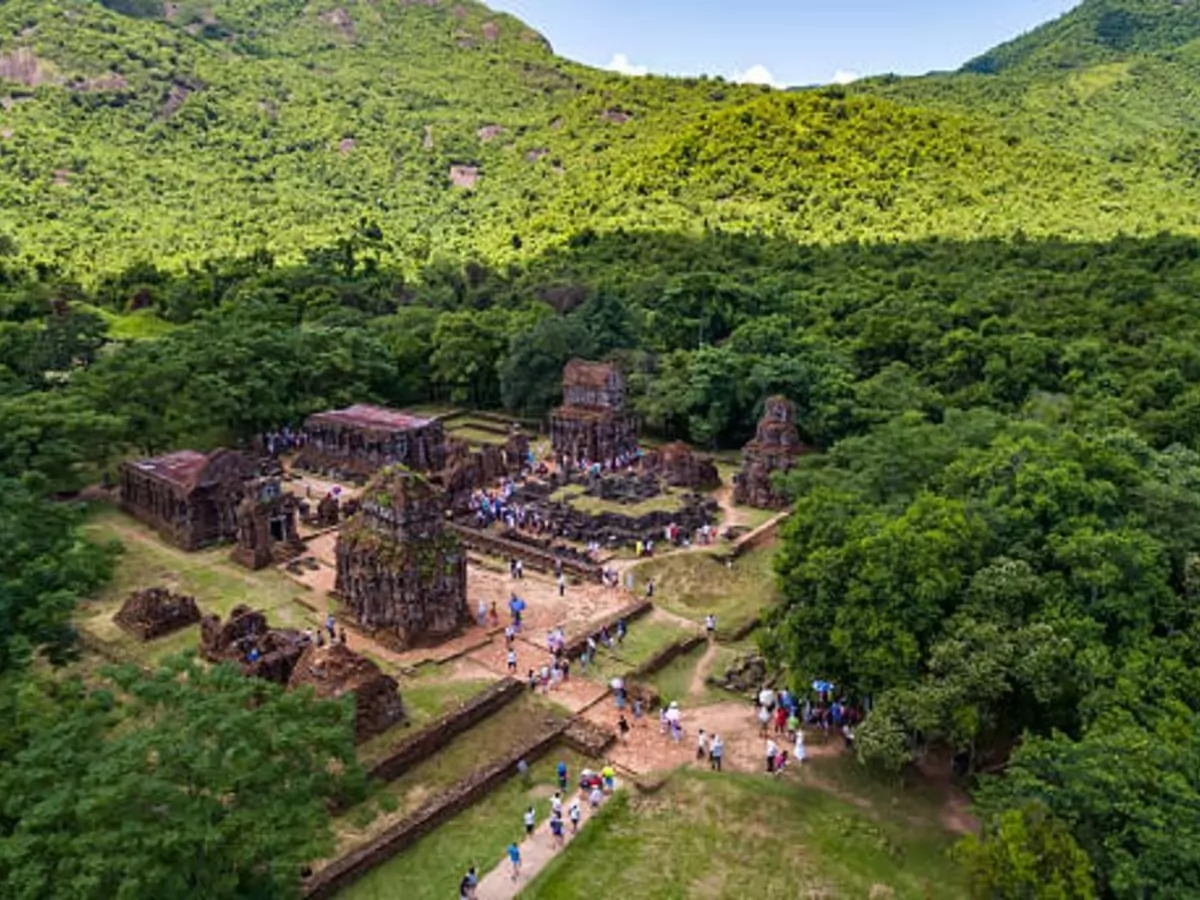
From Hoi An Ancient Town, it takes about an hour’s drive through peaceful and lush countryside roads to reach My Son Sanctuary. If you’re coming from Da Nang, the 70-kilometer journey makes for an ideal day trip by motorbike, private car, or guided tour. Nestled in a secluded valley surrounded by rolling mountains, the sanctuary offers not only a serene atmosphere but also retains a sacred spiritual essence.
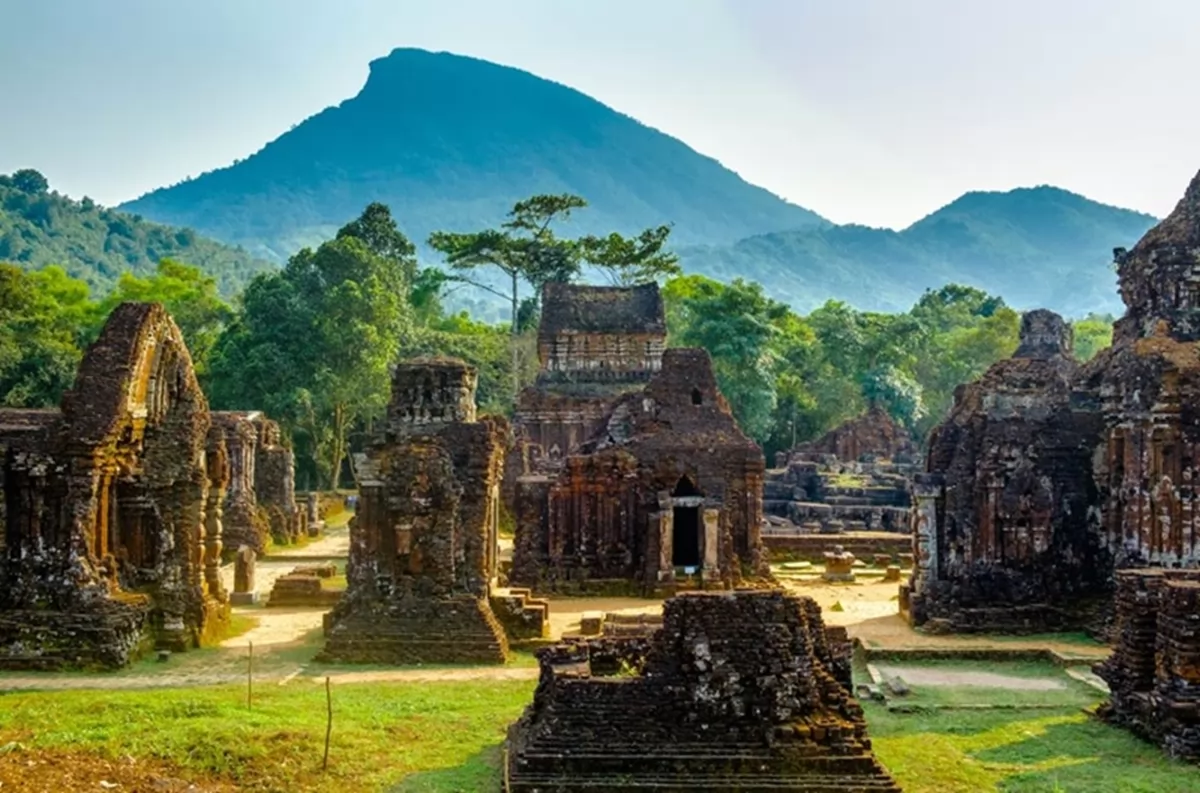
1.2. Historical and Cultural Significance of the Champa Heritage
My Son was once the most important religious center of the Champa Kingdom. It hosted royal ceremonies, served as the burial site for Cham kings and nobles, and symbolized the spiritual strength of the entire dynasty. The Sanskrit and ancient Cham inscriptions found here are valuable resources for studying the beliefs, culture, and architectural artistry of the Cham people.
My Son’s cultural value lies not only in its thousand-year history but also in its elegant fusion of Southeast Asian indigenous culture with Hinduism—an outstanding example of early cultural integration and development in Vietnam’s history.
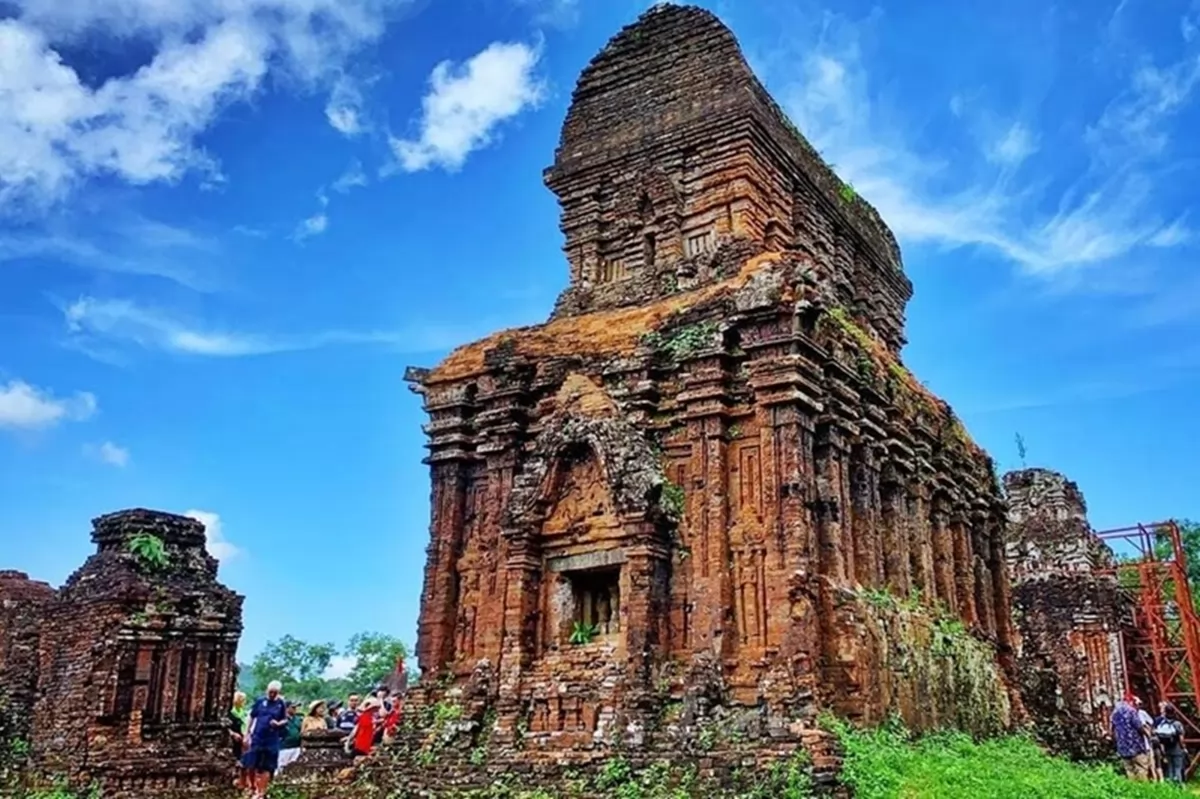
1.3. Recognized by UNESCO as a World Cultural Heritage Site in 1999
In 1999, thanks to its remarkable historical, architectural, and cultural significance, My Son Sanctuary was designated a UNESCO World Cultural Heritage Site. It met two key criteria: representing a significant cultural interchange and serving as an outstanding example of a vanished civilization—the Champa Kingdom.
Since then, My Son has become a must-visit destination on the Central Vietnam heritage trail, attracting thousands of visitors annually with its solemn beauty and sacred atmosphere that remains intact despite the passage of time.
2. History and Architectural Value
The turbulent history of My Son Sanctuary clearly reflects the rise, prosperity, and eventual decline of the Champa Kingdom. Its architecture is not only a religious symbol but also a masterpiece of art deeply influenced by Hinduism.
2.1. The Role of My Son Sanctuary in the Ancient Champa Kingdom
The construction of My Son Sanctuary began in the 4th century under the reign of King Bhadravarman, marking the start of a building tradition that would last for nearly a thousand years.
Unlike other monuments that were built in a single era, My Son evolved continuously as each successive Champa dynasty added new temple clusters to honor their specific lineage and divine protectors.
This long-term development turned the valley into a grand architectural record, reflecting the kingdom's shifting artistic styles and political expansion from the 4th to the 14th century. As the spiritual heart of the realm, it remained the only site that maintained its sacred status throughout the entire rise and fall of the Champa civilization.
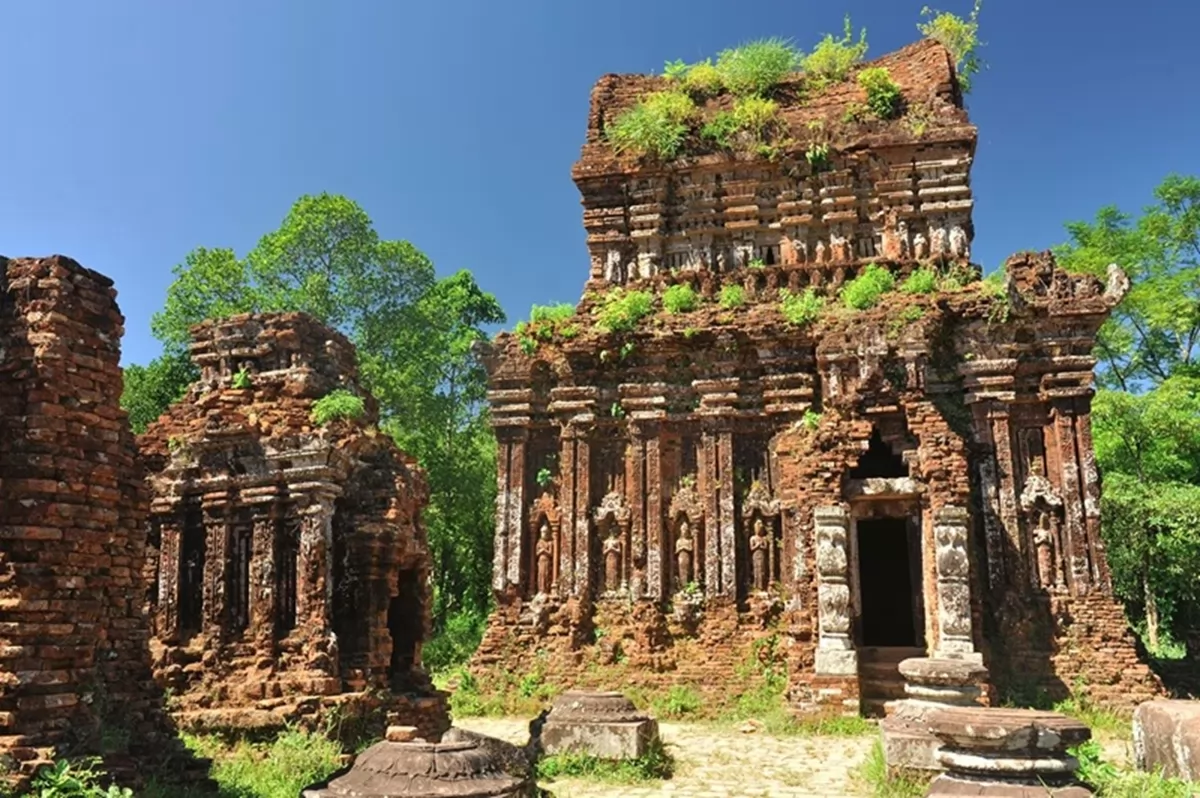
2.2. Unique Temple Architecture Influenced by Hinduism
The standout feature of My Son is its temple architecture, which is heavily influenced by Indian Hinduism. Temples were typically built along an east–west axis, with the main tower (Kalan) symbolizing Mount Meru—the cosmic mountain in Hindu belief. Surrounding it were auxiliary structures such as entrance towers, meditation halls, and treasure houses for ritual items.
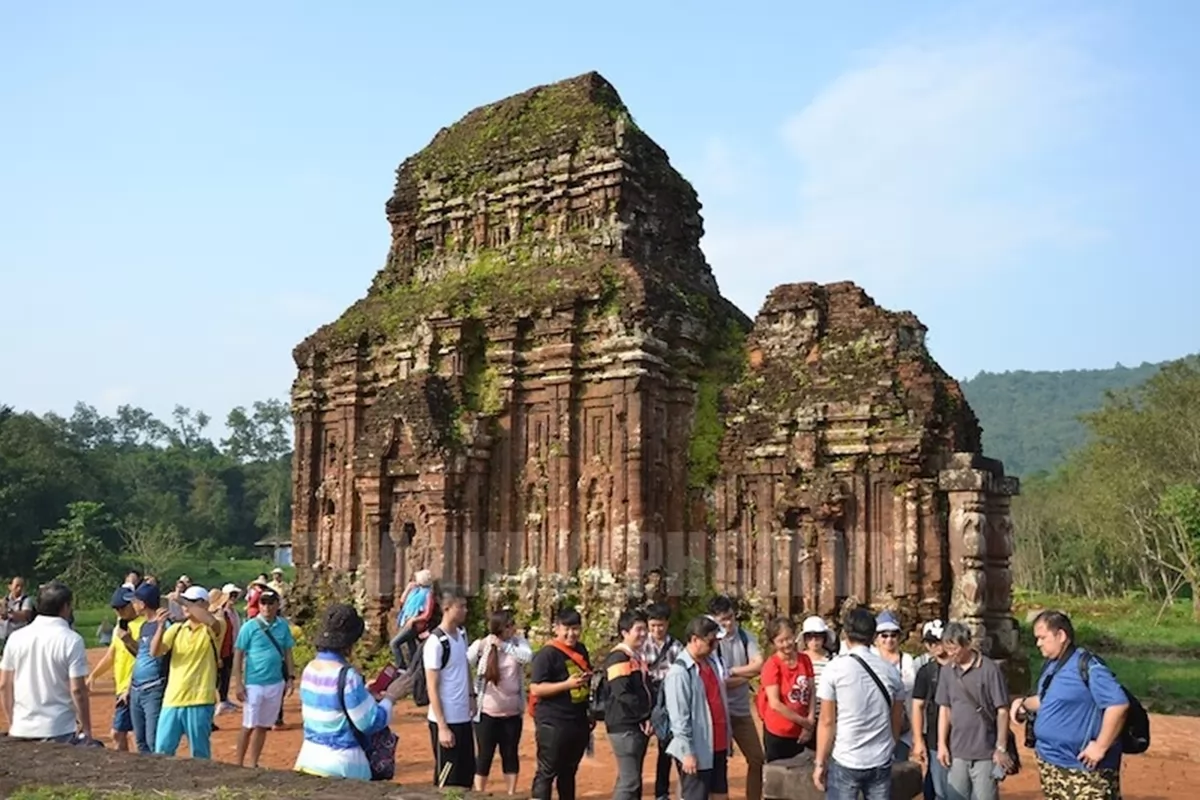
All the structures were built using baked red bricks, assembled with a mysterious mortar-less technique. The bricks fit together so tightly that even modern science struggles to fully explain how it was done. The carvings on the bricks showcase exceptional craftsmanship, featuring symbolic figures such as the god Shiva, Apsara dancers, lions, elephants, and other sacred animals—each vividly depicted and rich in meaning.
2.3. Different Stages of Construction, Prosperity, and Decline
The development of My Son can be divided into three key periods:
- 4th–7th centuries: The initial phase, with temples made of lightweight materials like wood. After Chinese invasions destroyed these wooden structures, baked brick construction began, marking a turning point in building techniques.
- 8th–13th centuries: The golden era of Champa. Dozens of structures were built, forming a diverse architectural complex with distinct styles—such as My Son groups A, A’, B, C, D, E, etc. This period also featured the most refined carvings, reflecting the peak of artistic and spiritual development.
- Post-14th century: The decline of the Champa Kingdom due to wars with Dai Viet and its eventual collapse. My Son was gradually forgotten in the jungle. In the 20th century, the site suffered severe damage during war—particularly in 1969 when American bombings destroyed much of the central complex.
Though only about 32 structures remain relatively intact today, My Son still stands as a vivid testament to a once-glorious civilization—an irreplaceable legacy in the history of Southeast Asian architecture.
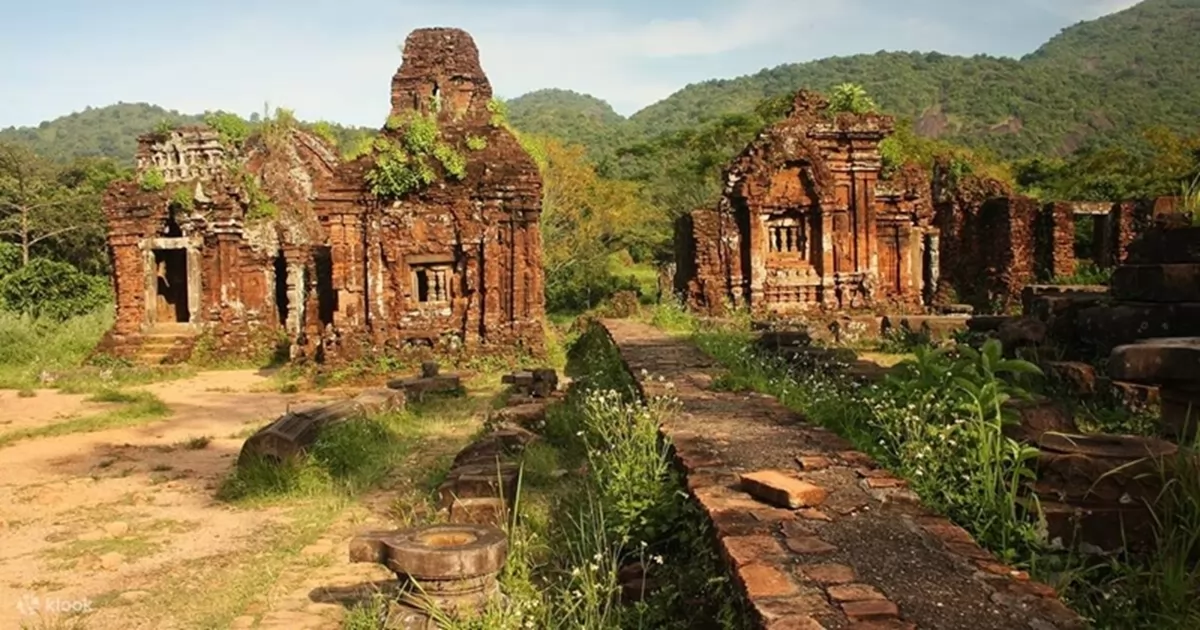
3. Highlights When Visiting My Son Sanctuary
A visit to My Son Sanctuary offers not only a glimpse into ancient, mysterious ruins but also an immersive experience of the spiritual and cultural essence of the ancient Cham people.
3.1. The Ancient Temple Complex Nestled in a Lush Green Valley
My Son is set in a narrow valley surrounded by rolling mountains and lush greenery. This quiet and peaceful environment creates a stunning backdrop for the ancient temples that rise beautifully amid the untouched nature. The complex once had over 70 architectural structures, divided into several clusters such as Groups A, B, C, D, and more. Among them, Group A is the best preserved, offering a comprehensive view of ancient Cham architecture.
What makes these towers especially unique is the use of red bricks and a mysterious construction method that did not involve mortar—yet the bricks have remained tightly joined for centuries.

3.2. Intricate Carvings and Bas-reliefs with Strong Religious Symbolism
Each structure at My Son is elaborately adorned with bas-reliefs and stone sculptures depicting Hindu deities such as Shiva, Vishnu, and Krishna; Apsara dancers; lions, elephants, and various sacred animals. These artworks are not only visually stunning but also deeply spiritual, reflecting the Cham people's religious philosophy, beliefs in fertility, and their unique worldview.
One of the most striking features is the frequent appearance of the linga-yoni symbol, representing the union of male and female energies, creation and destruction—core concepts in Hindu cosmology.
3.3. Cham Dance Performances and Cultural Activities
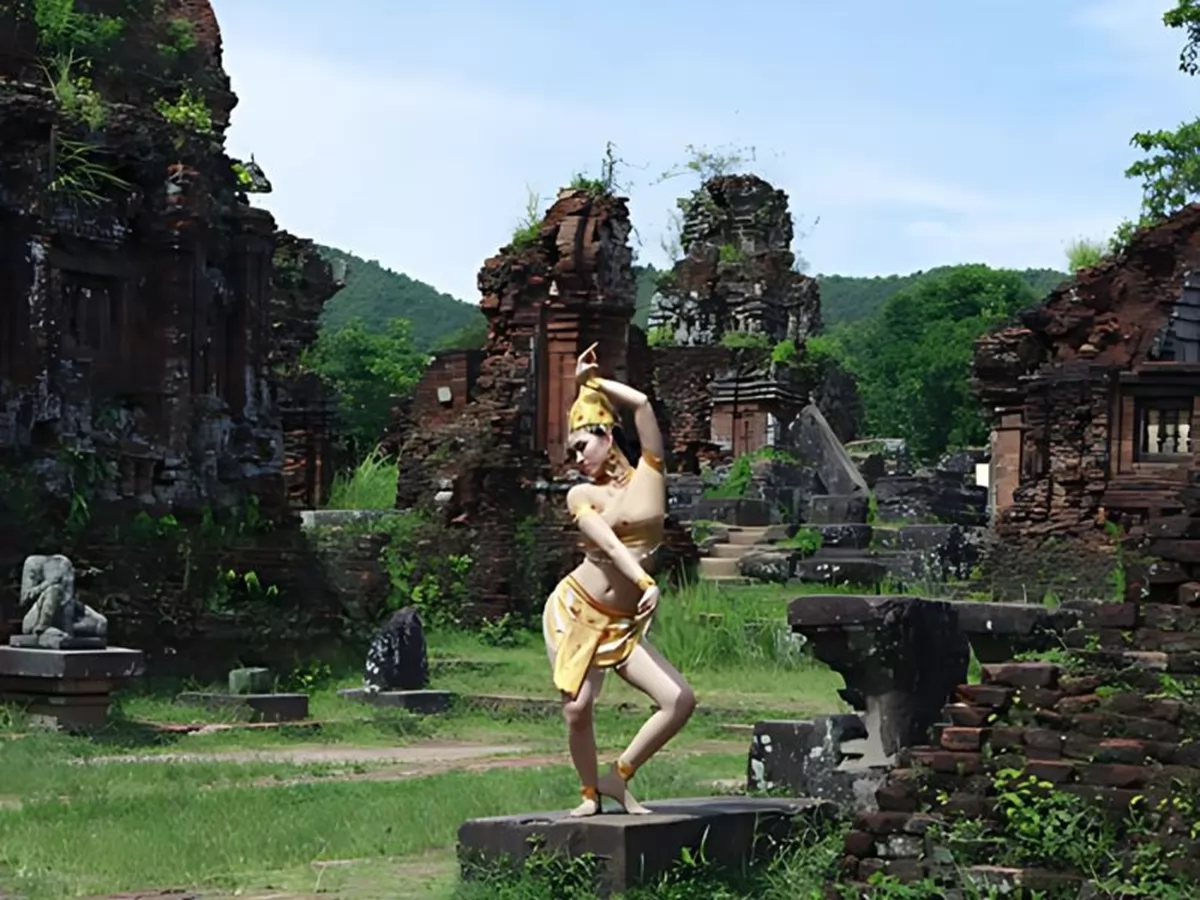
A must-see experience at My Son is the traditional Cham dance performances. The graceful, flowing Apsara dances seem to bring the ancient bas-reliefs to life. The combination of traditional music and movement creates a sacred, emotionally rich atmosphere.
In addition, near the entrance of the sanctuary, there's a small museum displaying archaeological artifacts, inscriptions, and photographs documenting the discovery and restoration of the site. This museum offers valuable historical context and helps visitors gain a deeper appreciation of the sanctuary’s cultural significance.
4. Travel Tips for Visiting My Son Sanctuary
To enjoy a smooth and fulfilling trip to My Son Sanctuary, it's essential to prepare carefully in terms of timing, transportation, and personal items. Here are some helpful tips for visitors.
4.1. Opening Hours and Ticket Prices
My Son Sanctuary is open daily from 6:00 AM to 5:00 PM. The entrance fee is around 150,000 VND for international visitors and includes:
- Admission to the heritage site
- Electric shuttle service from the entrance to the temple complex
- Traditional Cham dance performances
- Access to the My Son Museum
It’s best to visit early in the morning or late in the afternoon to avoid the intense midday heat and crowds. These times also offer the best lighting for photography.
4.2. The Best Time of Year and Day to Visit
Although My Son is beautiful year-round, the ideal time to visit is from February to April, when the weather is cooler and rainfall is minimal. During the summer months (May to August), the weather is sunny but quite hot—so early morning visits are recommended.
The most pleasant times to explore the site are before 8:00 AM or after 3:00 PM, when the sunlight is softer and the atmosphere is more peaceful and mystical.
4.3. Suggested Itinerary Combining My Son, Hoi An, and Da Nang
Here’s a suggested one-day itinerary:
- 06:30 – Depart from Hoi An or Da Nang
- 07:30 – 09:30 – Explore My Son Sanctuary and watch a Cham dance performance
- 10:30 – 12:00 – Visit Thanh Ha Pottery Village or Kim Bong Carpentry Village
- 12:30 – 14:00 – Lunch at a local restaurant
- 14:30 – 16:30 – Stroll through Hoi An Ancient Town, visit the Japanese Bridge, historic houses, and assembly halls
- 17:00 – 18:30 – Watch the sunset by the Hoai River and conclude the journey
Travelers can also book a full-day guided tour with a reputable agency, which often includes transportation and a knowledgeable guide to provide deeper insights into the site's history and culture.
5. Visitor Guidelines
To ensure a safe, respectful, and meaningful visit to My Son Sanctuary, it’s important for visitors to be aware of a few essential rules when exploring this cultural heritage site.
5.1. Rules of Conduct and Preservation Awareness
As a UNESCO World Cultural Heritage site, My Son requires visitors to maintain cleanliness, avoid littering, and refrain from touching artifacts. Climbing on structures, drawing or carving on the brick walls is strictly prohibited. Visitors are also expected to respect the spiritual atmosphere of the site.
Some areas are under restoration or restricted for conservation purposes. Please follow the staff’s instructions and avoid entering unauthorized sections.
5.2. Dress Code When Entering the Temple Complex
Since this is a sacred religious site, visitors should dress respectfully and modestly. Avoid wearing revealing clothing—especially when entering main temples. Long pants and short- or long-sleeved tops are recommended.
Also, remember to bring a hat or cap and wear sunscreen, as the site has limited shade and can get very sunny, especially at midday.
5.3. What to Bring: Walking Shoes, Hat, and Drinking Water
Exploring My Son requires a fair amount of walking, including on dirt paths, uneven stones, and steps. Be sure to bring:
- Comfortable walking shoes or sneakers
- A hat or umbrella for sun protection
- Your own drinking water, as vendors are limited within the site
- Sunscreen and insect repellent for health and comfort
You can also bring a camera or smartphone to capture stunning moments—but note that using drones (flycams) is not allowed without prior permission.
Conclusion
My Son Sanctuary is not only a lasting symbol of the ancient Champa civilization, but also a fascinating example of cultural fusion between the East and the West. With its mysterious ancient towers, intricate carvings, and sacred atmosphere nestled in nature, the site promises a profound experience for all visitors.
Plan your trip to My Son Sanctuary today and immerse yourself in a timeless journey—where history, art, and spirituality converge in the heart of Central Vietnam.
See more:
>>> 30+ unique experiences every visitor must try in Hoi An
-
Hotline: 1900 63 66 00
-
Press 1 For tickets
-
Press 2 For Customer Service
 Explore Kim Bong Carpentry Village – The Timeless Charm of Traditional Woodcraft
 15+ Best Bars in Hoi An – Perfect Spots to Chill and Enjoy the Nightlife
Related news
.webp)
Hoi An Memories: 100% Attractive Ticket Prices - Latest Offers in 2026

Hoi An Day Trip: A Detailed Guide to Fully Exploring the Town in 2026

Top 20 Must-Visit Attractions in Da Nang You Shouldn't Miss
Latest news

MID-AUTUMN FESTIVAL AT THE TRADING PORT – A NIGHT OF MEMORIES, A MEETING OF FIVE CULTURES
.webp)
Hoi An Memories Land Shines Bright to Welcome Visitors for Vietnam’s National Day
.webp)
.webp)
National Day Dressed in the Colors of the Flag with Hoi An Memories Show’s Special Edition

Comment