


Tra Que Vegetable Village: Discover the Green Heart of Hoi An


Far away from the bustling life of the Old Quarter, there is a peaceful place like a vivid ink painting, where time seems to stop to give way to the gentle sounds of rural life. That is Tra Que Vegetable Village, a green oasis in the heart of the heritage, where the scent of soil and herbs blends with the sun and wind, lulling visitors into a peaceful sleep. Let's step into this rural paradise, feel the breath of nature, return to the pristine values, and discover the rustic but charming beauty of this unique farming community with Hoi An Memory Land.
1. Introduction to Tra Que Vegetable Village
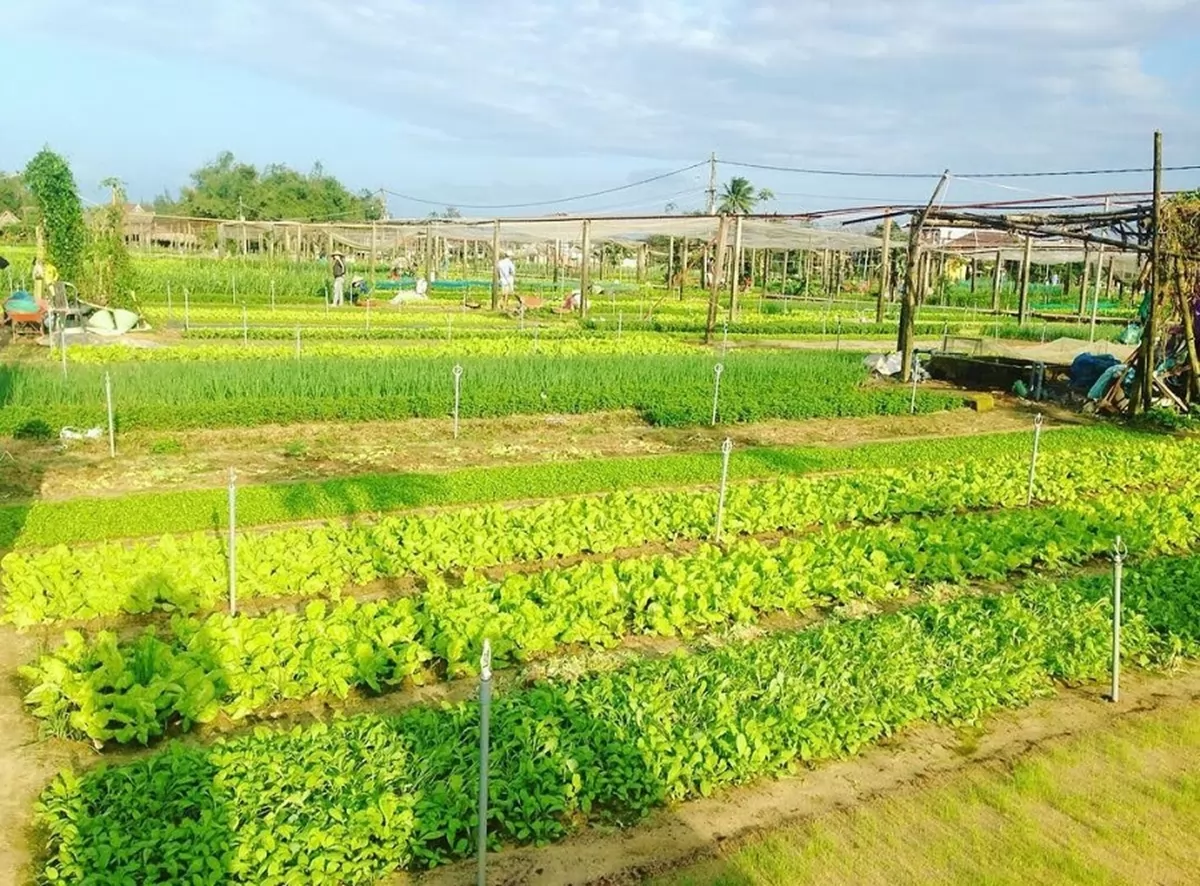
Located just 3 kilometers north of the Ancient Town, Tra Que is a world away from the bustling streets. Spanning approximately 20 hectares, this village is renowned not just for its lush rows of greens, but for preserving the soul of Central Vietnam’s agricultural tradition.

1.1 Brief History of the 300-year-old Farming Village
The village has a history stretching back over 300 years. Originally, it was known as "Nhu Que," famous for growing scented herbs. Legend has it that a Nguyen Dynasty king, upon tasting the vegetables here and finding them as fragrant as cinnamon (Que) and camellia (Tra), renamed the village Tra Que.
Today, more than 200 households continue to maintain these ancestral farming traditions, creating a living museum of agriculture that has been recognized as a National Intangible Cultural Heritage.
1.2 Why Tra Que is Known as the “Organic Garden” of Hoi An?
Tra Que is distinct from any other farm you might visit. The secret lies in the soil and the fertilizer. Farmers here do not use chemical fertilizers or harsh pesticides. Instead, they use a special type of natural algae found in the nearby De Vong River and Co Co River lagoon. This natural technique ensures that the vegetables (the mint, coriander, basil, and lettuce) are not only safe and organic but also possess a richness of flavor and aroma that is impossible to replicate elsewhere.
2. Things to Do in Tra Que Vegetable Village
Tra Que Vegetable Village is more than just a sightseeing spot; it is a place of interaction and connection. Here are the experiences we recommend to truly understand the local lifestyle.
2.1 Join Local Farmers in Planting, Watering and Harvesting
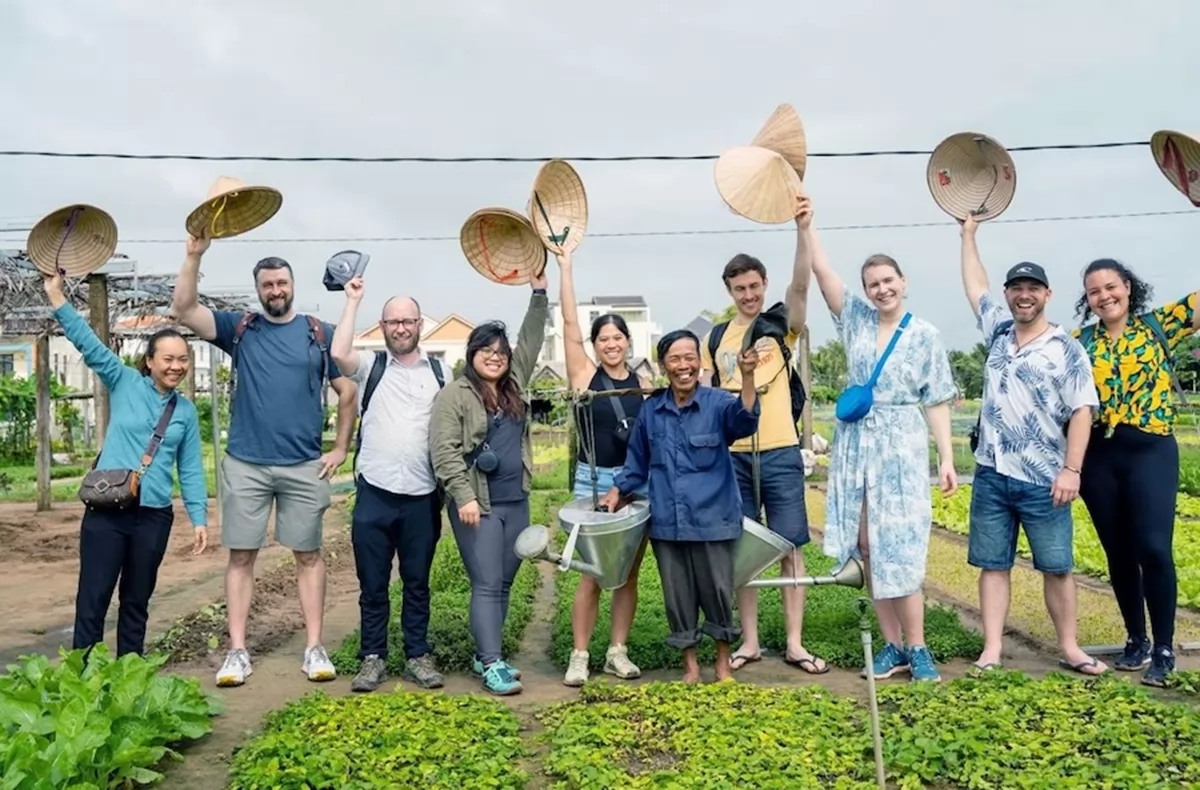
Don the traditional farming clothes (often a brown "ba ba" shirt and conical hat) and step into the shoes of a local villager. Friendly farmers will guide you through the entire process: tilling the fine soil, fertilizing with riverweed, and the art of watering crops using two large watering cans suspended from a bamboo yoke across your shoulders. It is a moment of honest labor that brings genuine joy and appreciation for the food we eat.
2.2 Learn How to Cook Traditional Dishes with Tra Que Herbs
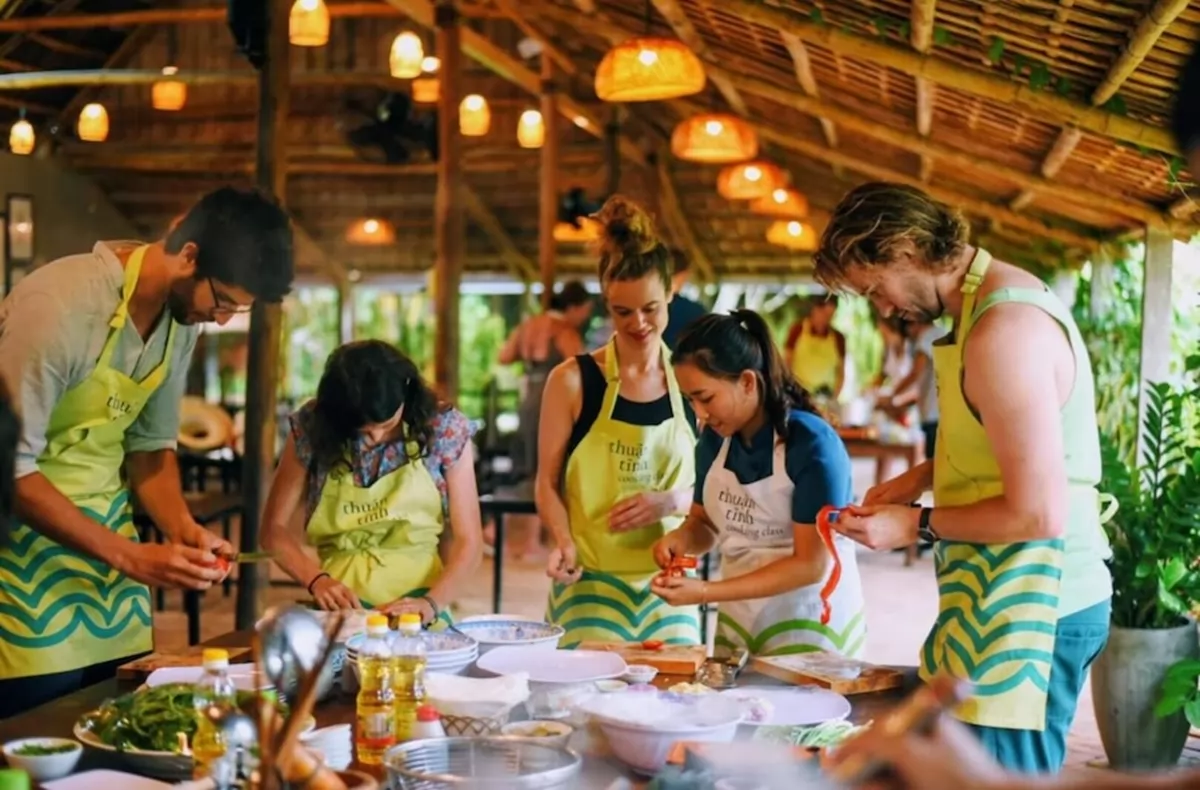
The farm-to-table concept finds its truest expression here. After harvesting fresh greens with your own hands, join a cooking class right in the garden. You will learn to prepare Hoi An specialties where herbs are the star ingredients. Understanding how to balance these aromatic flavors is a skill you will cherish long after you leave Vietnam.
2.3 Relax with a Foot Bath Made from Local Medicinal Plants
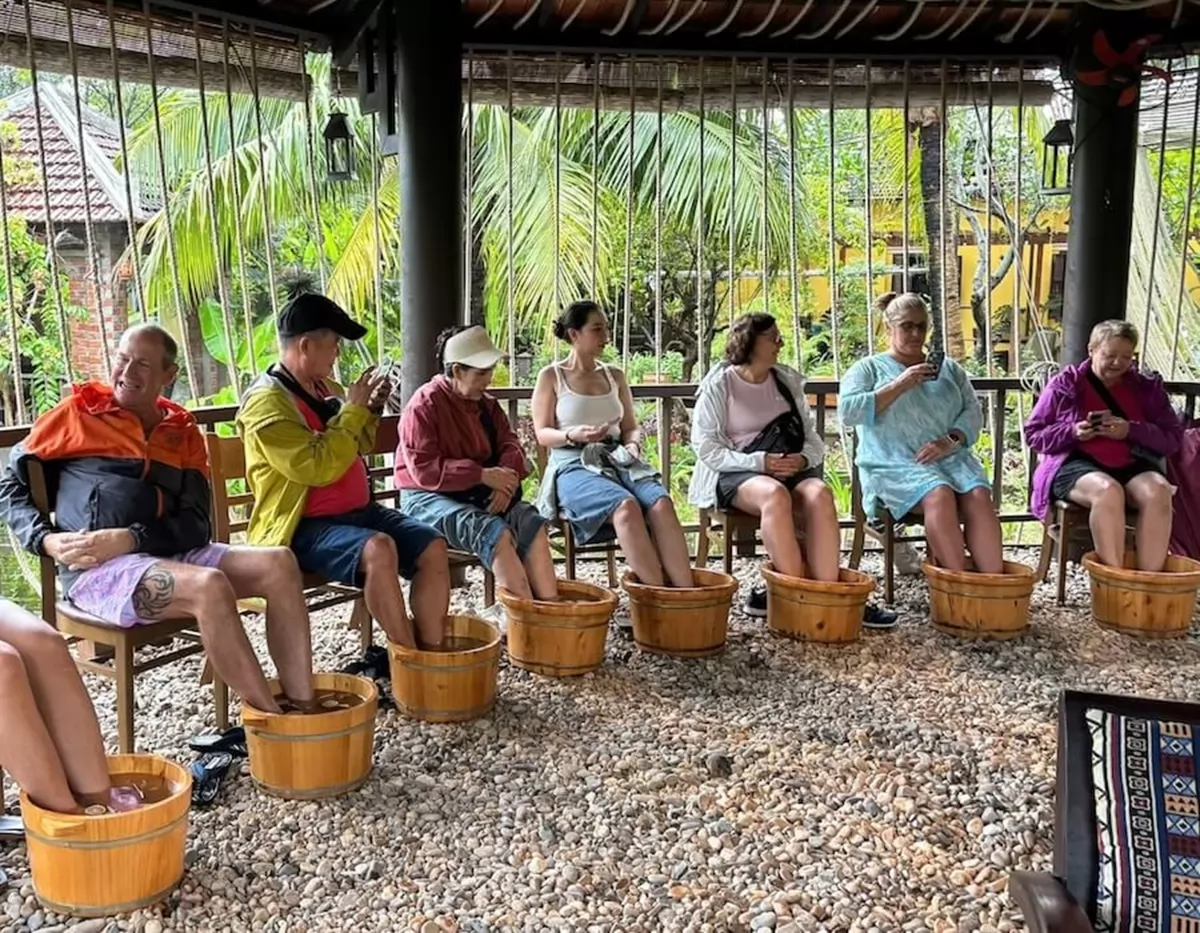
After a morning of farming or cycling, treat yourself to a traditional herbal foot bath. The villagers use a specific blend of medicinal herbs grown in the garden—such as lemongrass, basil, and ginger—boiled in water. Soaking your feet in this warm, fragrant mixture not only relieves fatigue but also provides a deep sense of relaxation for your body and mind.
2.4 Cycle around the Peaceful Countryside and Take Photos

Winding through the village are small, paved paths perfect for a leisurely bicycle ride. As you pedal past the symmetrical rows of green onions and lettuce, with the setting sun casting a golden glow over the fields, you will find endless opportunities for breathtaking photos. The scenery here is the definition of "healing" for the soul.
3. Culinary Delights with Tra Que Flavors
A trip to Tra Que Vegetable Village is incomplete without tasting its unique flavors. The herbs here are smaller than usual but packed with essential oils and strong taste.
3.1 Local Dishes Enhanced with Fresh Herbs: Tam Huu, Mi Quang, Banh Xeo

You must try the signature dish of the village: Tam Huu (Three Friends). This simple yet delicious appetizer consists of pork belly, shrimp, and a mint leaf, all tied together neatly with a blanched green onion. It symbolizes the close bond between the land, the river, and the people.
Additionally, the famous Mi Quang (Quang Noodles) and crispy Banh Xeo (pancakes) are elevated to a new level when served with the fresh, organic platter of greens harvested just meters away.
3.2. Refreshing Village Specialties such as Nuoc E (basil drink)
To beat the tropical heat, locals enjoy a drink known as Nuoc E (Basil Seed Drink). Made from the seeds of the sweet basil plant grown in the village, this beverage is slightly sweet, cooling, and renowned for its stress-relieving properties. It is the perfect refreshment after a walk through the sunny fields.
>>> See more: 10 must-do experiences for first-time visitors to Hoi An
4. Suggested Ways to Explore Tra Que Village
Depending on your schedule, you can choose how deep you want to dive into this green experience.
4.1 Half-day Farming and Cooking Tour
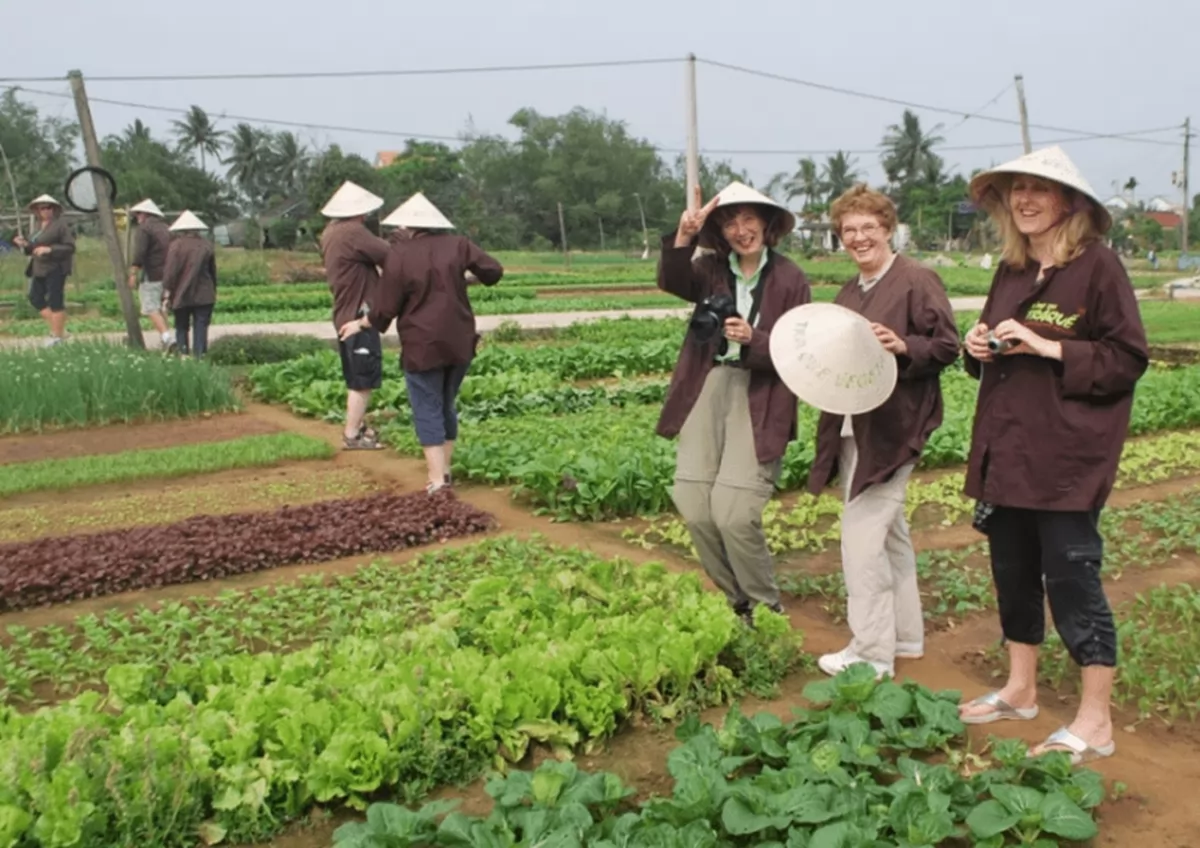
This is the most popular option. Spend your morning farming and your lunch cooking. It fits perfectly into a morning slot (8:00 AM – 1:00 PM), leaving your afternoon free to explore the Ancient Town. Don’t forget to watch Vietnam's most beautiful live show, Hoi An Memories Show, which takes place from 8:00 PM to 9:00 PM every evening (except Tuesday).
4.2 Full-day Cycling Trip Combining Tra Que and An Bang Beach
Since Tra Que Vegetable Village is located between the city center and the coast, it is an ideal stopover. You can cycle from Hoi An Ancient Town to Tra Que in the morning, have lunch there, and then continue cycling a short distance to An Bang Beach for an afternoon of sun and sea.
How to get to Tra Que from Hoi An Ancient Town: Starting from the Ancient Town, simply follow Ly Thuong Kiet Street until you reach the intersection with Hai Ba Trung Street. Make a right turn here and continue straight. Once you cross the small bridge, travel approximately 50 meters further, and the serene, verdant landscape of the vegetable village will appear right before your eyes.
4.3 Private Family-friendly Experiences
For families traveling with children, Tra Que offers a fantastic educational playground. Kids love the watering experience and seeing where their food comes from. Many gardens offer private family sessions where the pace is relaxed and tailored to younger visitors.
5. Practical Information for Visitors
To help you plan your visit seamlessly, here are some practical tips from Hoi An Memories Land.
5.1 Entrance Fee and Opening Hours
The village is generally open to visitors from 7:00 AM to 5:00 PM daily. To support the local community and maintain the landscape, there is an entrance ticket required, usually costing around 35,000 VND (approx. $1.50 USD). This fee often goes directly toward the village fund to support the farmers.
5.2 Best Time of Year to Enjoy the Green Fields
While vegetables are grown year-round, the best time to visit is from February to April. During these months, the weather in Hoi An is dry and cool, making outdoor activities pleasant. We recommend arriving early in the morning (before 9:00 AM) or late afternoon (after 3:30 PM) to avoid the midday heat and see the farmers at their most active.
5.3 Accommodation Options Nearby
For a truly immersive stay that complements your cultural journey, we warmly invite you to Hoi An Memories Resort & Spa, nestled within the enchanting Hoi An Memories Land.
Designed as a sanctuary of art and relaxation, our resort sits peacefully in the middle of the Hoai River, featuring distinct yellow architecture that echoes the nostalgia of the Ancient Town. After a morning of gardening at Tra Que Vegetable Village, you can return to our oasis to cool off in the infinity pool overlooking the river or indulge in a soothing treatment at Zense Spa to relax your muscles.

Staying with us not only offers luxury and comfort but also places you just steps away from the world-class real-world performance - Hoi An Memories Show. It creates a seamless itinerary from experience the rustic charm of the vegetable village by day to the majestic history of Faifo by night.
Tra Que Vegetable Village is a destination that touches the heart with its simplicity and authenticity. It creates a balance to your journey, offering a quiet moment to appreciate the "green" culture of Vietnam. We hope this guide helps you sketch a perfect itinerary. Let Hoi An and Tra Que paint a beautiful memory in your travel diary.
You might be interested in:
>>> The ultimate list of 30+ unique things to do in Hoi An
>>> Cau Bong Festival: The Cultural Heritage of Tra Que Vegetable Village
-
Hotline: 1900 63 66 00
-
Press 1 For tickets
-
Press 2 For Customer Service
 Useful Hoi An travel guide with 1001 frequently asked questions
 A Hoi An travel guide: Experience “Glamping” in nature near Hoi An
Related news
.webp)
Hoi An Memories: 100% Attractive Ticket Prices - Latest Offers in 2026

Hoi An Day Trip: A Detailed Guide to Fully Exploring the Town in 2026

Top 20 Must-Visit Attractions in Da Nang You Shouldn't Miss
Latest news

Hoi An Memories Land Honored with the “Corporate Excellence Award” at APEA 2026

Don’t Miss October’s Featured Heritage Experiences : Discover Hoi An’s culture through traditional workshops.

MID-AUTUMN FESTIVAL AT THE TRADING PORT – A NIGHT OF MEMORIES, A MEETING OF FIVE CULTURES
.webp)
.webp)
Comment