


Hoi An Night Market Food: Top Must-Try Dishes


When the typical lanterns light up the streets, the air is filled with the strong aroma and smoke from Hoi An night market dishes, turning the walking street into a vibrant outdoor restaurant. Hoi An Memories Land's guidebook will be your map to explore this culinary paradise with delicious, nutritious, and safe food tips.
1. Why trying the food at Hoi An Night Market is a must for visitors?
The Hoi An Night Market, centered on Cong Nu Ngoc Hoa Street, is a vibrant food paradise where visitors can witness traditional cooking methods firsthand amidst an electric atmosphere.
The market offers a diverse array of Central Vietnamese delicacies, including iconic dishes like Cao Lau, Mi Quang, stir-fried clams with rice crackers, and sweet corn soup, all prepared fresh on the spot.
Beyond the rich flavors, the market is a haven for travelers due to its remarkable affordability, with most dishes priced between $0.60 and $2.80. This combination of authentic street food, communal dining, and budget-friendly prices makes it an essential one-stop destination for anyone looking to experience the true culinary heart of Hoi An.
>>> See more: 10 must-do experiences in Hoi An: the perfect guide for first-time visitors
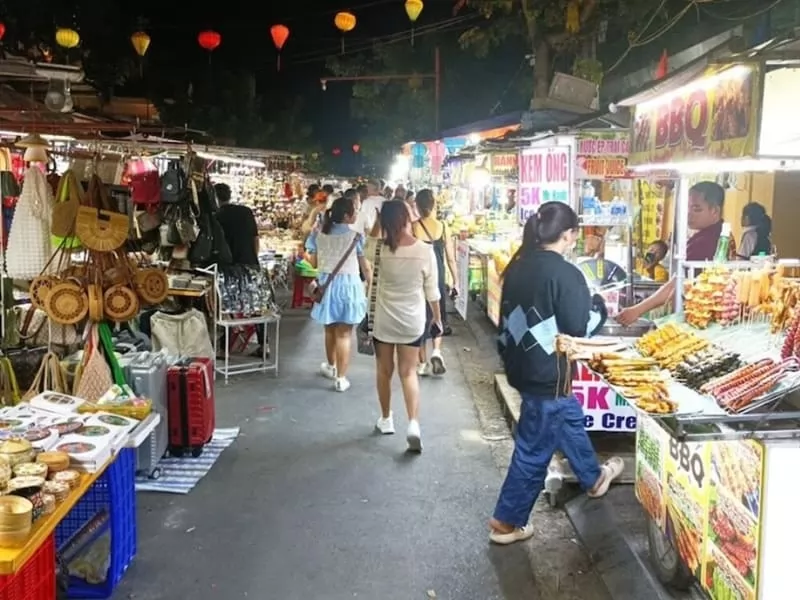
2. Top Hoi An Night Market Foods You Should Try
Exploring the night market is a feast for the senses, but the true treasure lies in Hoi An night market food. The following dishes are not just meals; they are essential cultural experiences that define the flavor of Hoi An.
2.1 Cao Lau - The Signature Noodle Dish of Hoi An
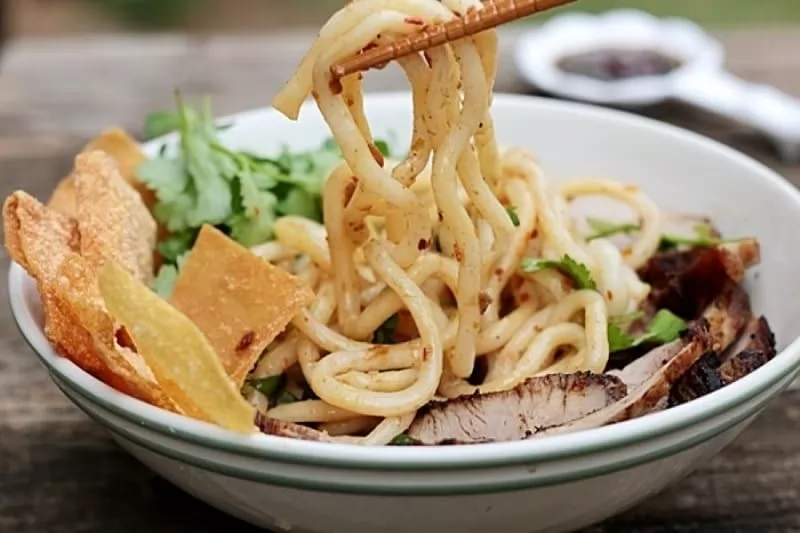
Cao Lau is the quintessential dish that every visitor must try, remarkable for being found almost exclusively in Hoi An. The dish features thick, Cao Lau noodles, sliced roast pork, crispy pork skin, fresh herbs, and bean sprouts, all coated in a concentrated broth.
What elevates Cao Lau to a local icon is its strict use of geographically specific ingredients: the broth must be drawn from the famous Ba Le Well, and the lye water used to prepare the unique noodles must come from the ash of trees on the nearby Cu Lao Cham island. These elements create an inimitable flavor and texture, cementing its status as Hoi An’s signature dish.
- Price: Typically ranges between $0.60 – $2.00 USD (15,000 – 50,000 VNĐ).
2.2 Mi Quang - Central Vietnam’s Iconic Noodle Dish
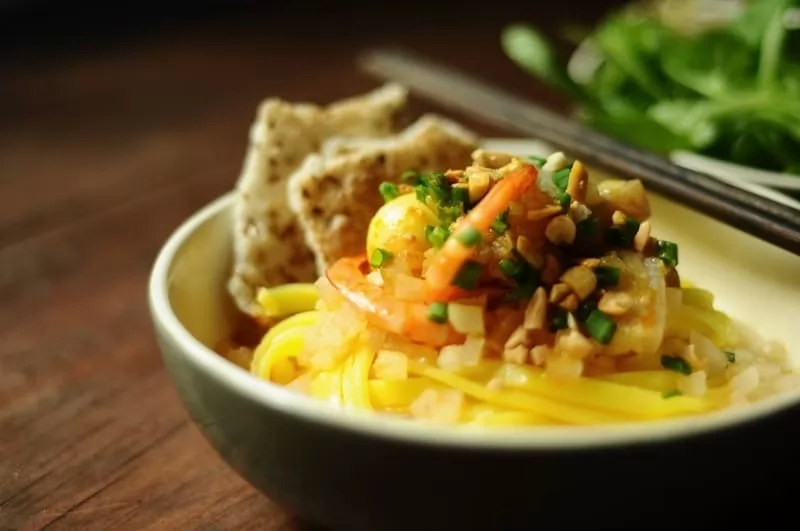
Quang Noodles (Mì Quảng) are a fundamental culinary symbol of Quảng Nam province, deeply rooted in local life and traditions, appearing in daily meals and major holidays.
Quang Noodles is famous for its rich, yet moderate broth that offers harmony without being overly fatty. The noodles are made from soft, flexible rice flour, cut into large pieces, and given a distinct golden color from turmeric. Unlike some regional variations, it is always served with fresh raw vegetables like mustard greens, banana flowers, basil, and a piece of crispy grilled rice paper. The versatility of toppings (chicken, shrimp, quail eggs, pork, or snakehead fish) ensures a rich, flavorful dish that has been recognized as a national intangible cultural heritage.
- Price: Typically ranges between $0.60 – $2.00 USD (15,000 – 50,000 VNĐ).
2.3 Hoi An Chicken Rice - Golden Rice with Shredded Chicken
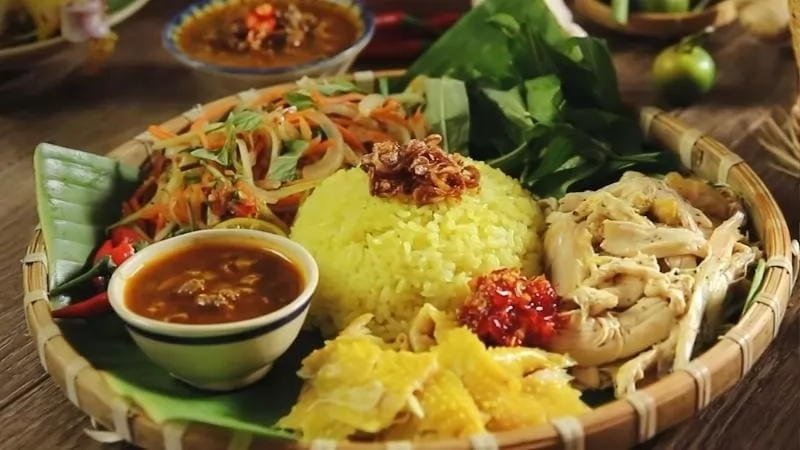
Hoi An chicken rice holds a special place in the local cuisine due to its rich, unforgettable flavor, with origins dating back to the 1950s.
The distinction lies in the meticulous preparation: the chicken is sourced from flavorful, free-range Tam Ky chickens, hand-shredded, and mixed with fresh onions, herbs (like rau ram), and spices. The rice is cooked in rich chicken broth infused with chicken fat, turmeric, and pandan leaves, giving it a distinctive golden hue and rich aroma. It is served with a unique, house-made chili sauce and balanced with sweet-and-sour pickled green papaya, a combination that embodies the "soul of Quảng Nam."
- Price: Typically ranges between $1.00 – $2.50 USD (25,000 – 60,000 VNĐ).
2.4 Hoi An Banh Mi - Crispy Baguette with Flavorful Fillings
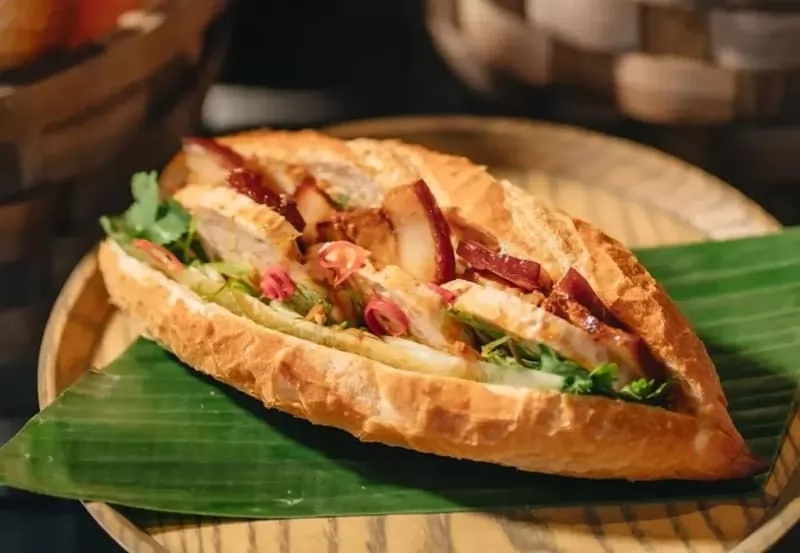
Banh mi Hoi An is a culinary icon and a quintessential reflection of Vietnamese street food artistry.
Unlike standard Vietnamese baguettes, Hoi An's bread is thinner, lighter, and boasts a perfectly crispy crust with an airy interior. It is baked fresh daily in traditional wood-fired ovens. The fillings are diverse and rich, often featuring marinated grilled pork or chicken, creamy homemade pâté and mayonnaise, pickled vegetables, and fresh herbs. This balance of crunchy bread, savory meat, creamy richness, and tangy pickles makes it globally famous, particularly through shops like Banh Mi Phuong and Madam Khanh.
- Price: $1.00 – $1.60 USD (25,000 – 40,000 VNĐ).
2.5 White Rose Dumplings - The Delicate “Hoi An Roses”
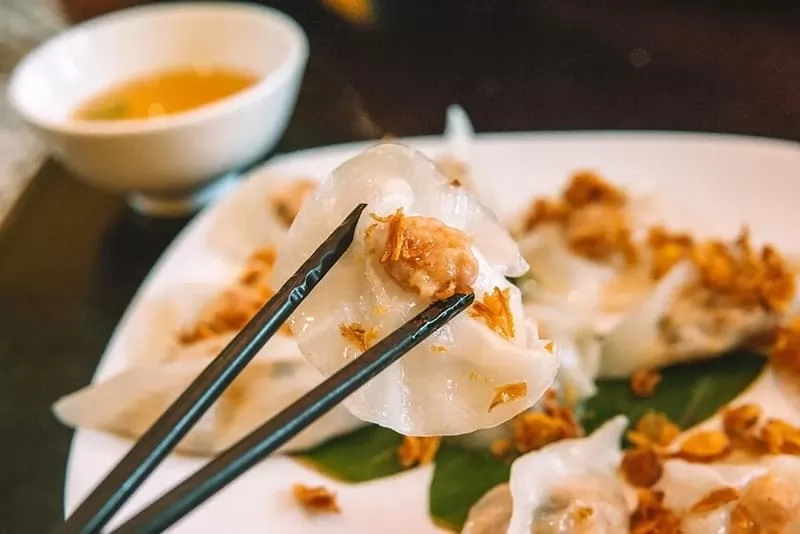
White rose dumplings (bánh hoa hồng trắng) are a delicate and visually striking traditional dish, often enjoyed as a snack or appetizer.
Despite the name, they contain no roses, but resemble a white rose in bloom. The dish typically combines two variations: bánh vạc (filled with ground freshwater shrimp, spices, and herbs) and bánh bao (filled with pork, spring onions, and wood ear mushrooms). They are arranged on a plate like a blooming rose, with a snowy-white rice flour layer, and served with a specialized dipping sauce that balances sourness, spiciness, and sweetness.
- Price: $0.80 – $4.00 USD (20,000 – 100,000 VNĐ).
2.6 Banh Dap with Stir-fried Clams - A Rustic Favorite Street Food
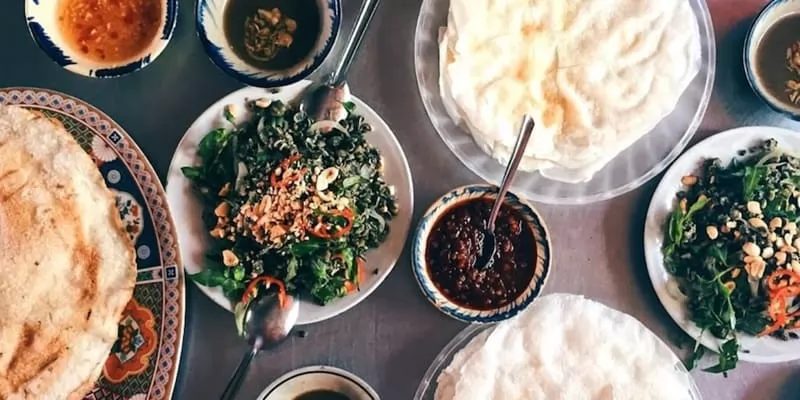
Banh Dap with Stir-fried Clams is a rustic, classic street dish combining contrasting textures and rich local flavors.
The name translates to the dish's components: bánh đập (a pair of rice cakes—one soft steamed and one crispy cracker—pressed together) and hến xào (small clams stir-fried with fragrant herbs and spices). The experience is a unique contrast of the cracker's crunch, the soft rice cake's silky chew, and the clams' savory, umami sweetness, often enhanced with fresh herbs and a bright acidic finish.
- Price: $0.80 – $2.40 USD (20,000 – 60,000 VNĐ).
2.7 Hoi An Sweet Soups (Chè) - Refreshing Desserts at the Night Market
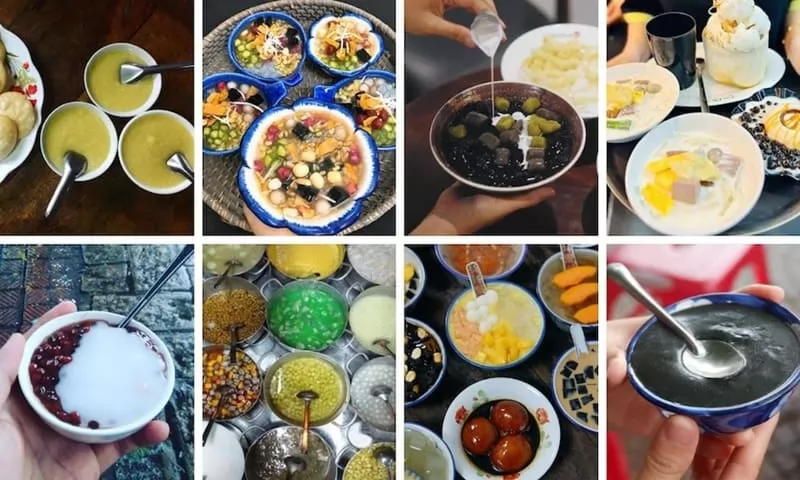
Hoi An sweet soup represents the gentle, heartwarming side of the local cuisine, offering a perfect end to a savory meal.
Hoi An sweet soup is a versatile dessert—a mix of beans, jellies, sticky rice, and coconut cream, often served cold with ice. In Hoi An, you can find specialty versions like chè bắp (sweet corn soup), chè đậu xanh (mung bean soup), chè hạt sen (lotus seed soup), and the distinct chè mè đen (chè xí mà hay black sesame sweet soup). The latter is known for its delicate, harmonious flavor, blending black sesame, medicinal herbs, and the refreshing taste of apricot and pennywort, setting it apart from other versions.
- Price: $0.60 – $1.40 USD (15,000 – 35,000 VNĐ).
2.8 Grilled Skewers & Seafood - Smoky Flavors of Hoi An Night Market Food
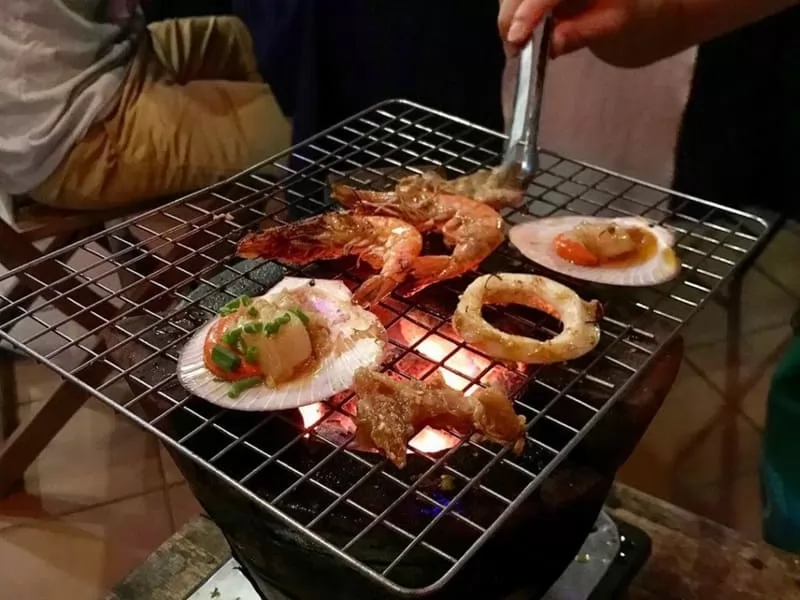
Hoi An night market food is characterized by its fresh, smoky flavors from grilled skewers and seafood cooked to order.
Vendors cook seafood and various meats, notably lean pork (thịt nướng) and minced pork skewers (nem lụi), right on-site over charcoal. For the grilled pork, thin, wide slices are carefully marinated, sprinkled with sesame seeds, and layered with vegetables before grilling. The signature way to enjoy it is wrapping the meat with fresh herbs and cucumber inside a thin rice paper. The smoky flavor and simple presentation make this an irresistible night market staple.
- Price: $0.30 – $0.60 USD per skewer (8,000 – 15,000 VNĐ/xiên).
2.9 Vietnamese Pizza (Banh Trang Nuong) - Crispy and Fun Snack
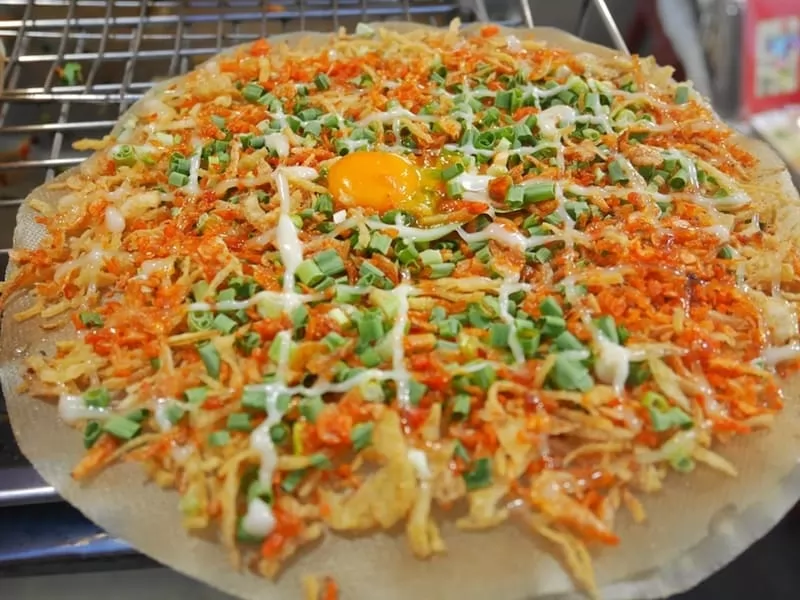
Bánh tráng nướng has earned the nickname "Vietnamese pizza" due to its flat, round shape and diverse, customizable toppings.
The rice paper is grilled over hot charcoal until it turns golden and crispy. The toppings, reflecting local street food creativity, often include quail eggs, dried shrimp, pork floss, chopped green onions, chili sauce, and mayonnaise. This combination provides a complex flavor and texture profile: the delicate crunch of the rice paper contrasts with the soft egg and savory meat, making it a highly satisfying, portable night market snack.
- Price: $0.60 – $1.20 USD (15,000 – 30,000 VNĐ).
2.10 Mot Herbal Drink - The Most Famous Drink at Hoi An Night Market
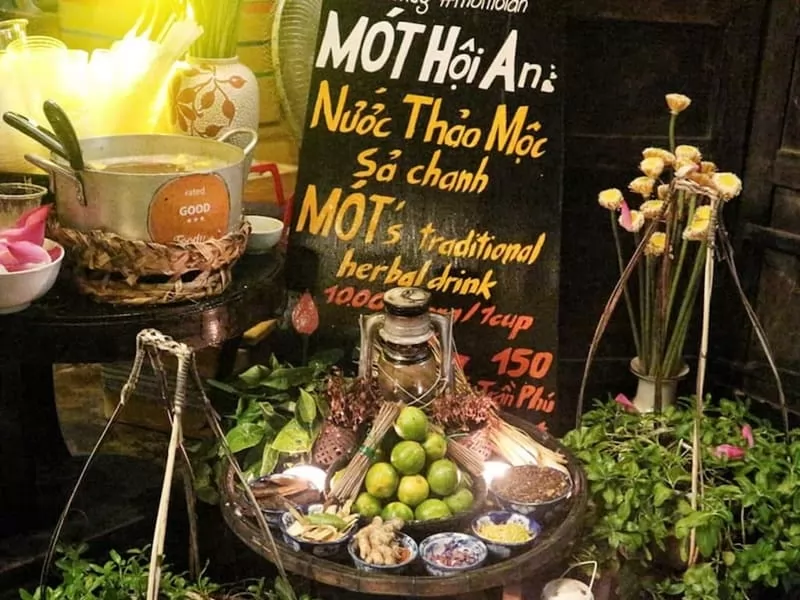
Mot herbal drink is a highly famous, refreshing herbal tea, often sold near the night market, despite the first store being on Tran Phu Street.
Mot tea is not just tea; it's a unique blend of traditional herbs (lemongrass, ginger, cinnamon, licorice) and medicinal plants, combined with fresh water from the Ba Le well. The recipe is a closely guarded family secret, making this fresh, harmonious, and cooling drink exclusive to Hoi An. It is typically served chilled with ice in a paper cup, garnished with lotus petals, offering both a pleasant taste and health benefits.
- Price: The source does not list a specific average price, but as a local beverage, it is highly affordable (typically under $1 USD).
>>> See more: Tra Mot Hoi An: The Refreshing Herbal Drink That Captures Hearts in the Old Town
3. Tips for Enjoying Hoi An Night Market Food
To make the most of the diverse and bustling culinary scene at the Hoi An Night Market, planning your visit with these practical tips will enhance your enjoyment and ensure a seamless experience.
3.1 Best Time to Visit the Night Market for Food
While the market officially starts operating around 5:00 PM, the ideal time to visit specifically for food is typically between 7:00 PM and 10:00 PM. At that time, all stalls and activities are operating at full capacity. This ideal timeframe ensures you catch the freshest street food, the liveliest ambiance, and the full spectacle of the lantern displays.
3.2 Smart Shopping and Eating Tips at Hoi An Night Market
A crucial trick for finding the best food is to look for long lines or large groups of local patrons. Vendors with high customer turnover generally offer the freshest ingredients and the most authentic flavors. Don't hesitate to join a queue; the quality is often worth the short wait.
While food prices are generally low and often fixed, especially for single servings of famous dishes like Cao Lau or Banh mi, it is wise to check the price before placing your order. If buying larger souvenirs or bulk street food items, remember that the bargaining custom allows for small negotiations (usually 10-20% off the asking price) approached with a friendly smile.
3.3 Hygiene and Food Safety Notes for Night Market Food
When choosing a stall, always observe the preparation area and the freshness of the ingredients. Select vendors who are visibly cooking the food to order right in front of you (like grilled skewers or Vietnamese Pizza), and who maintain clean countertops and utensils.
Prioritize hot, freshly cooked food, as the high heat will eliminate potential contaminants. Dishes like grilled skewers, banh mi, or Quang noodles are often great options.
From the iconic traditional Cao Lau and the comforting warmth of Hoi An chicken rice to the delicate sweetness of black sesame dessert and the crunch of grilled rice paper, every bite tells a story of locality and craftsmanship. Each dish is a must-try when visiting Hoi An at night. Don’t just visit the night market; immerse yourself in the unforgettable flavors of Hoi An night market food and let them shape your adventure in the Ancient Town.
See more:
>>> Exploring Hoi An Night Market: a hidden gem you won’t want to miss in the heart of the Ancient Town
>>> 30+ truly unique experiences in Hoi An you shouldn’t miss
>>> The ultimate Hoi An travel guide with answers to 1001 frequently asked questions
-
Hotline: 1900 63 66 00
-
Press 1 For tickets
-
Press 2 For Customer Service
 Discovering the map of Hội An Impression Theme Park
 Exploring Hoi An Night Market: A Gem in the Heart of the Ancient Town
Related news

Cao Lau Hoi An: Origins, Unique Flavors, and the Best Places to Eat

Hoi An Street Food Tour: Top 10 Must-Try Local Delicacies

A Comprehensive List of Restaurants in Hoi An: From Local Delicacies to International Dining 2026
Latest news

Hoi An Memories Land Honored with the “Corporate Excellence Award” at APEA 2026

Don’t Miss October’s Featured Heritage Experiences : Discover Hoi An’s culture through traditional workshops.

MID-AUTUMN FESTIVAL AT THE TRADING PORT – A NIGHT OF MEMORIES, A MEETING OF FIVE CULTURES
.webp)
.webp)
Comment