


The Whale Worship Ceremony - A Unique Cultural Tradition of Hoi An Fishermen


The Whale Worship Ceremony is a unique cultural event of Hoi An fishermen, symbolizing their faith and gratitude towards the Whale, their guardian god at sea. The festival not only preserves folk cultural values but also attracts tourists, opening up opportunities to explore the cultural beauty and history of Hoi An Ancient Town.
1. Discovering the Whale Worship Ceremony in Hoi An
Origins
The Whale Worship Ceremony, also known as the Whale Festival, is a traditional ritual of fishermen in Hoi An, demonstrating the people's reverence for the Whale—a giant marine creature. The origin of this festival can be traced back to the spiritual beliefs of the Vietnamese people, where the Whale is seen as a guardian deity for those working at sea.
Legend has it that the Whale not only helps fishermen find peace on every voyage but also protects them from the dangers of storms and waves. The festival takes place annually to show gratitude and remember the merits of the Whale in protecting fishermen, while also praying for smooth and bountiful sea voyages.
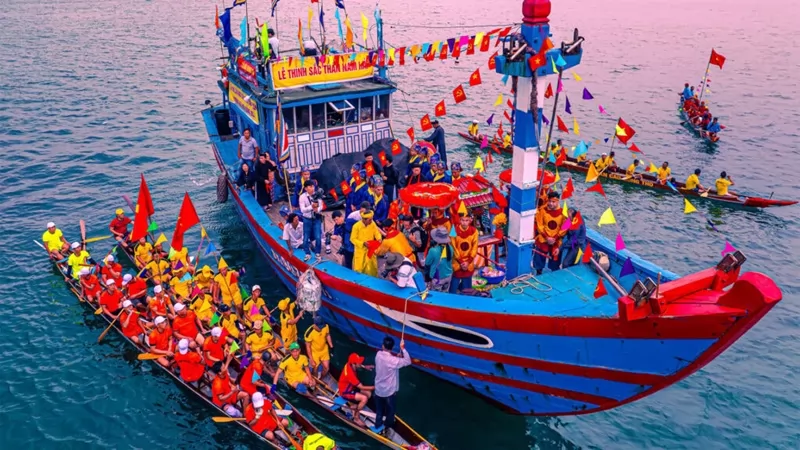
The grandeur of the Whale Worship Ceremony
Cultural Significance of the Festival
The Whale Worship Ceremony not only carries the meaning of honoring this creature but also deeply reflects the culture and spirituality of the coastal people. The festival becomes an occasion for the Hoi An fishing community to bond with each other, demonstrating solidarity, sharing, and preserving traditional cultural values. The rituals in the festival are often associated with community activities such as processions, offerings, and folk games. This is also an opportunity for people to pray together for a prosperous, healthy new year and a fuller life.
2. When Does the Whale Worship Ceremony Take Place During the Year?
This ritual is usually held in the third lunar month every year, on the 16th day, a date with special spiritual significance for fishermen. This time marks the beginning of the fishing season when the sea becomes calm and favorable for setting sail. For the fishing community in Hoi An, this is not only an occasion to remember the Whale but also an opportunity to pray for safe and bountiful voyages.
The activities in the festival take place in a vibrant, energetic atmosphere. People from all over flock to the event, bringing their own thoughts and wishes, immersing themselves in the solemn and colorful atmosphere of the festival. This is also the time when Hoi An people express their gratitude to the Whale and pray for big catches and a prosperous life. Organizing the festival at this time not only shows reverence for the Whale but also affirms the close bond between humans and the sea, as well as the important role of fishing in the local economic life.
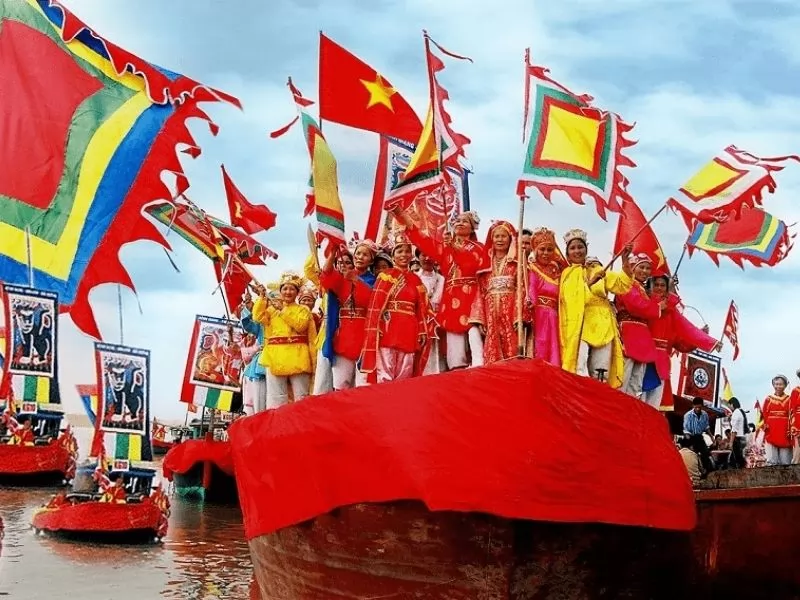
The heroic atmosphere in an important ritual of the people of Quang Nam
3. Rituals Performed During the Whale Worship Ceremony
The Peace-Praying Ceremony
The Peace-Praying Ceremony is one of the most important rituals in the Whale Worship Ceremony, taking place early in the morning. Fishermen gather at the Whale Temple, where solemn rituals are held. They offer trays of food, fruits, and fragrant incense, showing reverence and gratitude to the Whale. In a solemn atmosphere, the elders will chant prayers for peace, health, and favorability in the fishing season.
Every family participates in this ritual, bringing their own wishes for their family and community. This warm and meaningful atmosphere creates a strong connection between people, demonstrating the spirit of solidarity and mutual support in life. Besides, the prayers are not only for the Whale but also directed towards the peace of the fishermen and their families.
The Grand Procession at Sea
After the Peace-Praying Ceremony, the ritual of parading the Whale to the sea takes place in a lively atmosphere. People will prepare a large palanquin, symbolizing the image of the Whale, and proceed to parade through the main streets. The sound of traditional musical instruments blending with the urging drums creates a jubilant atmosphere.
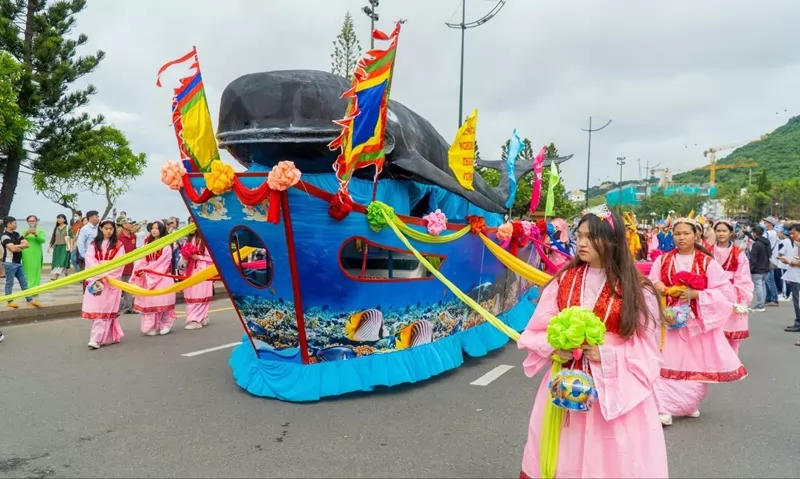
The Whale Worship Ceremony attracts a large number of local people and visitors.
When arriving at the beach, the procession is carried out with the participation of a large number of fishermen and tourists. They together release the Whale (symbolic offering) to the sea, expressing gratitude and the wish that the Whale will bring peace to the voyages. This ritual not only has spiritual meaning but also reflects the community spirit and the connection between humans and the sea. This scene attracts many attendees, creating a joyful festival atmosphere, tied to beautiful memories of the Hoi An fishing community.
The Main Offering Ritual
The Main Offering Ritual is the final important part of the Whale Worship Ceremony, taking place with the participation of the village elders. This is an occasion to commemorate and pay tribute to the deceased, as well as pray for good things in life. The rituals take place with many steps and require careful preparation, from preparing offerings to arranging the worship space.
In the Main Offering Ritual, people will offer pure and characteristic local dishes, such as fish, shrimp, and specialty cakes. Afterward, the elders will perform the prayer ritual, reminding everyone of cultural traditions and gratitude towards those who have dedicated themselves to the sea profession. This is not only a ritual of reverence but also an opportunity for everyone to review precious cultural values, awakening the spirit of solidarity and pride in the community's traditions.
4. Other Famous Festivals in Hoi An
Hoi An is not only famous for the Whale Worship Ceremony but also possesses many other unique festivals, contributing to enriching the culture and spiritual life of the people here.
4.1 Thien Hau Goddess Festival
Originating from China, this festival takes place on the 23rd of the third lunar month at the Fujian Assembly Hall—a structure built by the Chinese community. The Thien Hau Goddess Festival aims to honor and remember the merits of the Goddess Thien Hau, who is believed to have protected and blessed fishermen and merchants to overcome challenges at sea. The ceremony is usually celebrated with a speech praising her in Chinese, accompanied by many lively activities such as lion dances, artistic performances, and lot-drawing rituals.
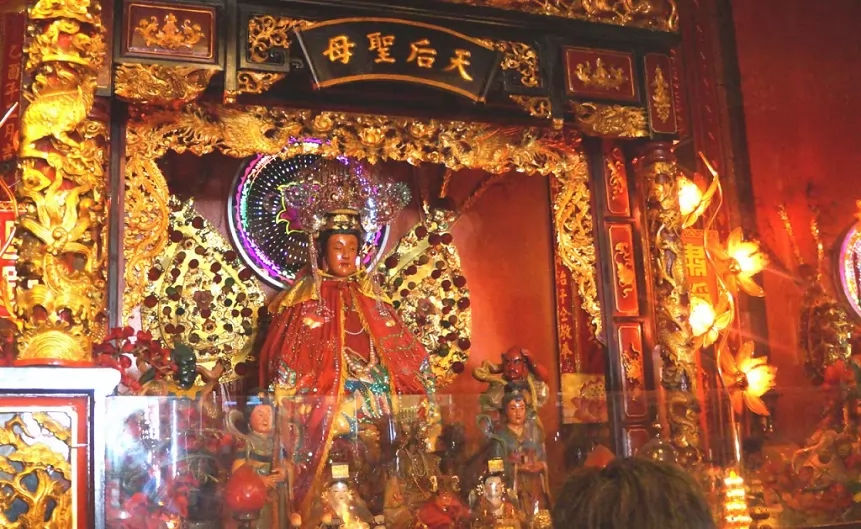
The Lady Thien Hau Festival originated in China
4.2 Thu Bon Goddess Festival
Held on the 12th of the second lunar month, this festival is associated with the remembrance of Lady Thu Bon, a person of Cham origin who brought agriculture and fishery, helping local people live favorably. In Hoi An, the festival takes place simply but still retains traditional activities such as cake-making contests, responsive singing, Chinese chess, and tug of war, attracting a large number of tourists to participate.
>>> Ba Thu Bon Festival: A Cultural Heritage of the Quang People
4.3 Thanh Ha Pottery Village Festival
Held on the 10th of the seventh lunar month annually, this festival is an occasion to remember the ancestors who built and developed Thanh Ha Pottery Village since the 16th century. Tourists will participate in activities such as the procession of the master deity's palanquin, folk games related to pottery, and admire lion dances and lively artistic performances, bringing a deep insight into the long-standing tradition of the craft village.
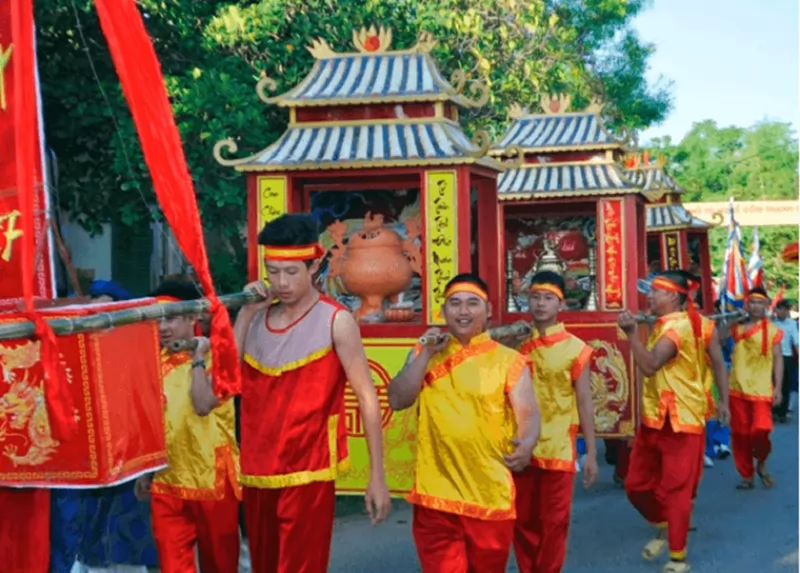
The Thanh Ha Pottery Village Festival is held annually on the 9th and 10th days of the seventh lunar month
4.4 Cau Bong Festival
Taking place on the 7th of the first lunar month, the Cau Bong Festival is an occasion for people to honor the merits of the generations who created the famous Tra Que Vegetable Village with a history of over 400 years. Tourists can experience vegetable planting and harvesting activities, compete in cooking skills, and participate in vegetable decoration contests, creating a friendly and intimate atmosphere.
>>> See more: Cau Bong Festival at Tra Que Vegetable Village: A Heritage Beauty (chèn bài rau trà quế)
4.5 Long Chu Festival
Also known as the Dragon Boat Festival, this festival takes place on the full moon of the first and seventh lunar months. Long Chu, an elaborately decorated boat in the shape of a dragon, is made from bamboo and crafted by veteran artisans. The festival has spiritual meaning, aiming to drive away evil spirits and protect the community. People set off firecrackers, parade the boat, and snatch talismans hanging in front of their doors to pray for peace. This is a unique ritual attracting the participation of tourists thanks to its mysterious nature and unique festival atmosphere.
>>> Explore more: The Long Chu Procession in Hoi An – a spiritual and cultural ritual in the Ancient Town (chèn bài long chu)
Conclusion
The Whale Worship Ceremony is a vivid proof of the love for the sea and the attachment of Hoi An people to traditional culture. With profound meanings and rich rituals, the festival not only brings joy to the community but is also a bridge between the past and the present. When participating in this ritual, tourists will feel the sacred atmosphere and the warmth of the people here. Besides the Whale Worship Ceremony, Hoi An has many other interesting festivals waiting for you to discover. Come and experience to better understand the unique culture and rich spiritual life of Hoi An fishermen.
>>> See more: Hoi An festivals: real events, dates, and cultural highlights
>>> Don’t miss: 10 things you shouldn’t miss on your first visit to Hoi An
-
Hotline: 1900 63 66 00
-
Press 1 For tickets
-
Press 2 For Customer Service
 Discover Hoi An through unique craft workshops
 17 Famous Pagodas and Temples You Must Visit in Hoi An
Related news
.webp)
Hoi An Memories: 100% Attractive Ticket Prices - Latest Offers in 2026

Hoi An Day Trip: A Detailed Guide to Fully Exploring the Town in 2026

Top 20 Must-Visit Attractions in Da Nang You Shouldn't Miss
Latest news

Hoi An Memories Land Honored with the “Corporate Excellence Award” at APEA 2026

Don’t Miss October’s Featured Heritage Experiences : Discover Hoi An’s culture through traditional workshops.

MID-AUTUMN FESTIVAL AT THE TRADING PORT – A NIGHT OF MEMORIES, A MEETING OF FIVE CULTURES
.webp)
.webp)
Comment