


Tra Que Vegetable Village's Cau Bong Festival - The Beauty of Heritage


Amidst the lush green space of Tra Que Vegetable Village, when the early spring weather still holds a hint of mist, the Cau Bong Festival takes place as a sacred ritual marking the beginning of the new year for the craft villagers. Not noisy or overly showy, the festival carries the rustic beauty of traditional agricultural culture, where people express their gratitude to heaven and earth, the God of Agriculture, and the founding ancestors who established the over 500-year-old vegetable village. Over time, the Cau Bong Festival is not only the spiritual belief of the Tra Que residents but has also become a living cultural heritage, contributing to the profound identity of the Hoi An land.
1. What is the Cau Bong Festival?
The Cau Bong Festival is one of the typical agricultural festivals of the Quang Nam region, closely associated with the traditional vegetable farming profession of Tra Que Village. This is an occasion for the local community to pay tribute to the ancestors, thank heaven and earth, and express their wishes for a favorable production year and a prosperous life.
>>> Explore: Tra Que Vegetable Village, the green oasis of Hoi An
1.1. Origins from the over 500-year-old Tra Que vegetable village
Tra Que Vegetable Village has a history of formation spanning over half a millennium, located between Tra Que Lagoon and De Vong River—an area with exceptionally fertile soil conditions. Since the village's founding, residents here have known how to utilize algae from the Co Co River to fertilize the vegetables, creating a unique flavor for the fragrant vegetables famous throughout the Quang region.
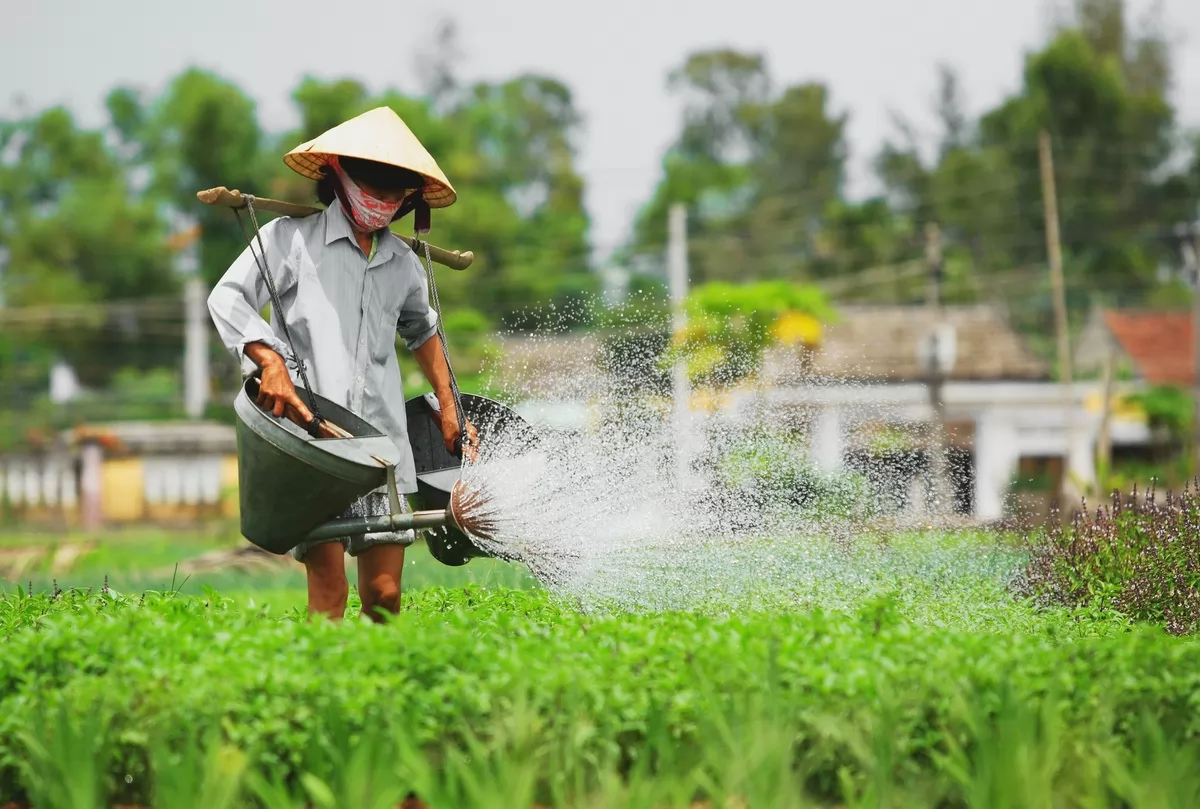
The Cau Bong Festival was born alongside the history of the traditional craft village, as a "season-opening" ritual, marking a new production cycle for the farmers. Through many generations, the festival has been maintained almost completely in terms of rituals and the traditional agricultural spirit.
1.2. Cultural significance and pure agricultural spirit
Not characterized by display or commercialization, the Cau Bong Festival clearly demonstrates the cultural identity of Vietnamese villages, where agricultural belief plays a central role. Through rituals worshipping the God of Agriculture and ancestors, people express their faith in divine protection, while recalling the merit of their forefathers who reclaimed the village land.
Besides the spiritual value, the festival is also an opportunity to foster community cohesion, connect generations within the village, and affirm the identity of Tra Que Vegetable Village amid strong urbanization and tourism development.
1.3. Differences from the Cau Bong Festival in Binh Phuoc
While sharing the name "Cau Bong", the festival in Tra Que has a completely different character compared to some other localities like Binh Phuoc. If in Tra Que, the festival is closely linked to suburban vegetable farming, garden spaces, and the belief in the God of Agriculture, in Binh Phuoc, Cau Bong ceremonies often relate to industrial crops or different agricultural-forestry production contexts.
The difference in natural conditions, occupations, and community structure has created distinct forms of rituals, organizational scale, and cultural character, highlighting the unique value of the Tra Que Cau Bong Festival in the system of Vietnamese agricultural festivals.
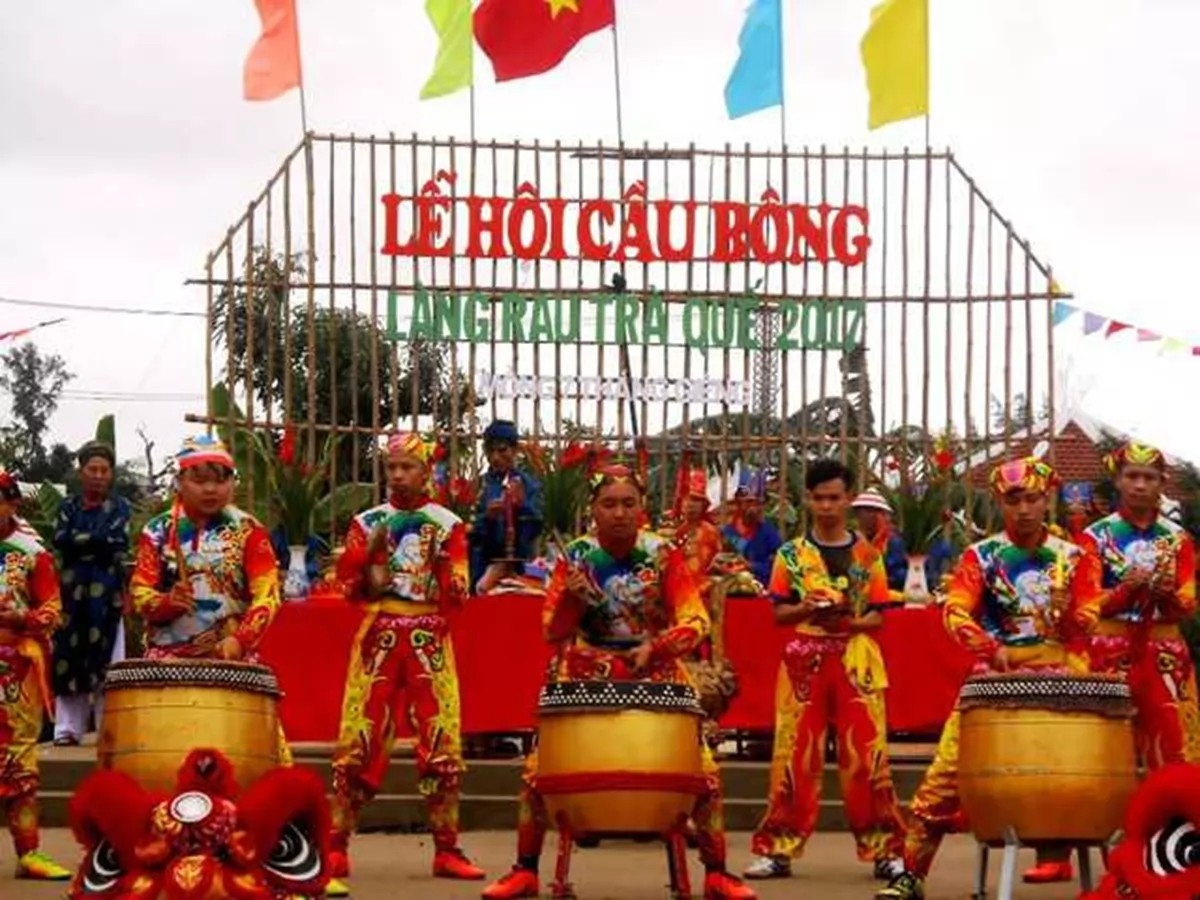
2. Sacred Rites & Age-Old Traditions Ritual Ceremonies
If the festival section brings a lively and intimate atmosphere, the ritual section of the Cau Bong Festival is a sacred space, showcasing the profound agricultural belief of Tra Que Vegetable Village. All rituals are performed carefully, strictly adhering to village customs, with the primary participation of elders and dignitaries, aiming to express reverence to the God of Agriculture, the ancestors, and the protective deities of the crops.
2.1. The Erecting of the Nêu Pole and Welcoming the Deities from the 6th of the First Lunar Month
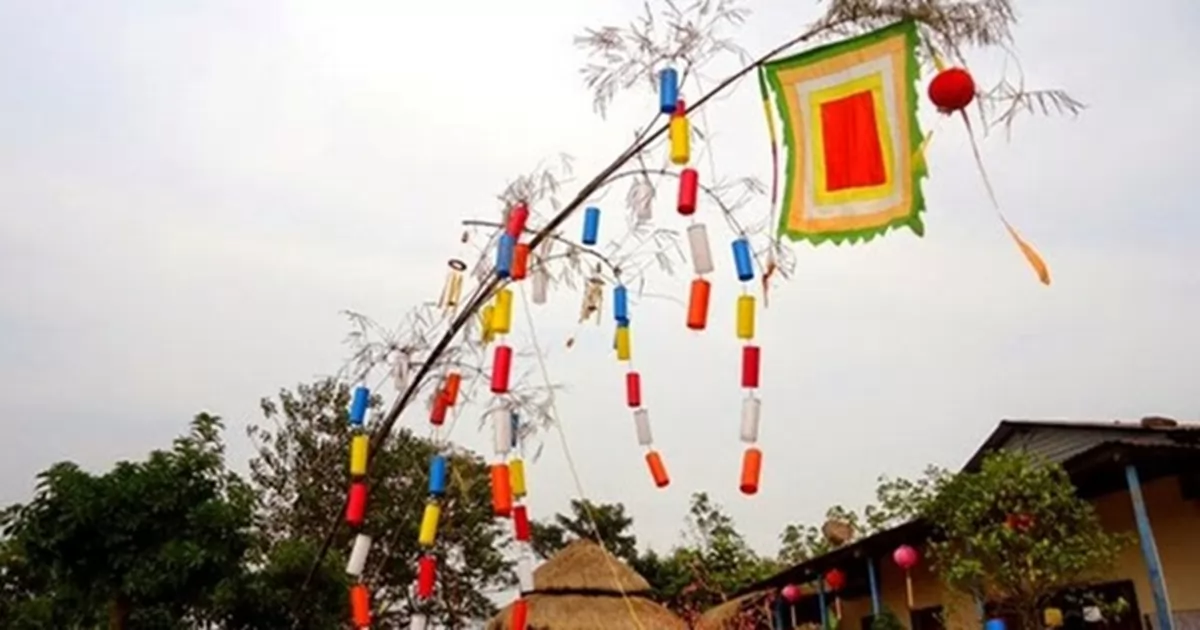
The Cau Bong Festival usually takes place over two days, starting from the 6th day of the first lunar month with the ritual of erecting the Nêu Pole and Welcoming the Deities. This is considered a vital opening step, signaling to the community that the main festival has officially begun.
The Nêu pole is erected in the Cau Bong worship yard amidst the space decorated with flags, banners, and flowers. Following this, the Deity Welcoming procession with drums, gongs, ceremonial instruments, and elders in traditional attire proceeds to escort the deities to the worship altar. This ritual expresses the wish to invite the deities to witness and bless the vegetable village in the new year.
2.2. Offering Worship to the God of Agriculture with trays of sticky rice, roosters, and fresh flowers
The center of the ritual section is the ceremony worshipping the God of Agriculture, the deity considered the protector of cultivation. The offerings presented bear a strong agricultural mark, including sticky rice, a rooster, wine, fresh flowers, and especially fresh, high-quality bundles of vegetables grown by the Tra Que residents themselves.
The image of the rooster with a flower in its mouth, colorful sticky rice, and local products not only carries ceremonial meaning but also symbolizes proliferation, abundance, and a sustainable farming cycle. Through this ritual, the residents of the vegetable village express their wish for favorable weather, fewer pests and diseases, and a good harvest with good prices.
2.3. Roles such as the Chief Worshipper, ceremonial attendants, and ancient liturgical texts
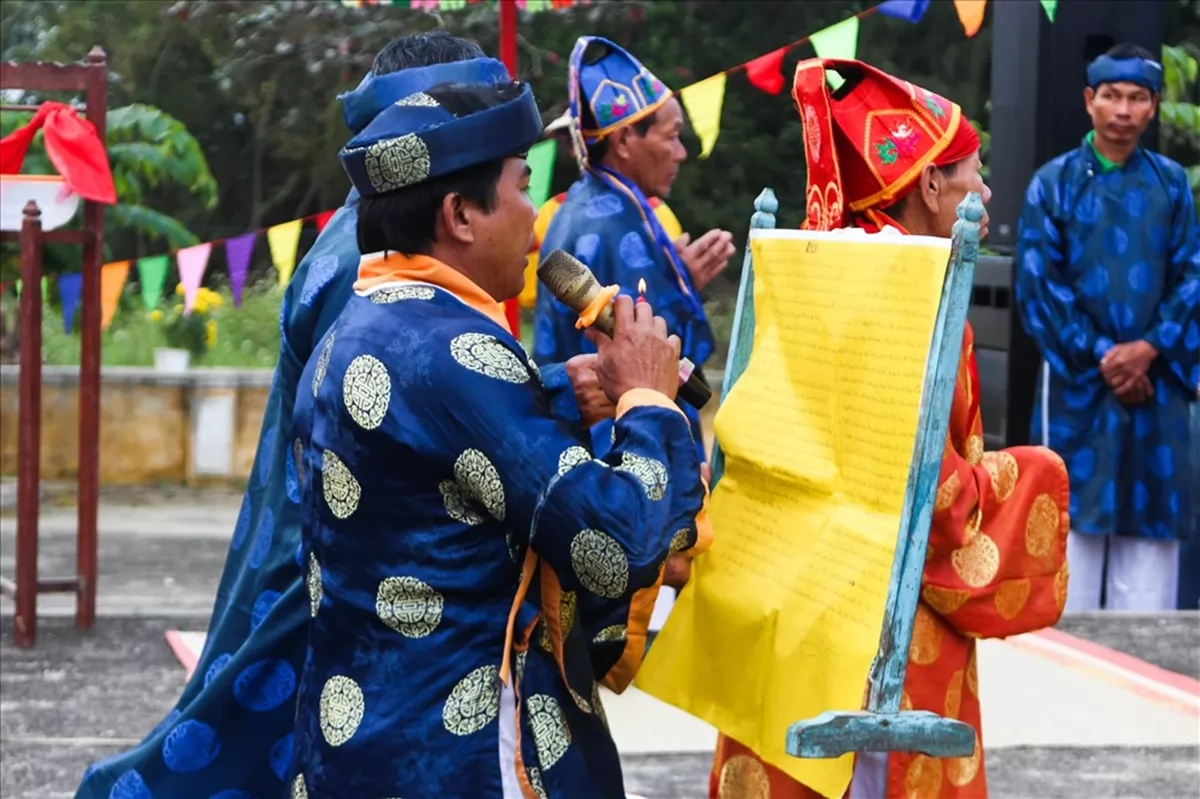
The ritual section is presided over by the elders and dignitaries in the village, those who understand the ceremonies and are trusted by the community. Roles such as the Chief Worshipper, Assistant Worshippers, ceremonial attendants, and ceremonial music team are clearly assigned, performing each step strictly according to the traditional sequence.
Notably, the Cau Bong liturgical text often consists of ancient writings, which may be in Han-Nom or National Script, whose content recalls the merits of the ancestors who reclaimed the village land, honors the vegetable farming profession, and wishes the villagers a peaceful year. The slow, solemn reading tone of the liturgical text creates a sacred, profound atmosphere in the hearts of the participants.
2.4. Worship at the village communal house and hamlet shrine
The space for practicing the Cau Bong rituals is not limited to one location but stretches across the Ancestral Hall, the Cau Bong worship yard, and the Hamlet Shrines in the village. Each hamlet, each clan prepares its own offering tray, which is then paraded to the worship points according to the village customs.
This continuous series of rituals contributes to increasing community spirit, connecting the hamlets, and affirming the central role of the village communal house in the spiritual life of rural Vietnam. This is also the factor that makes the Cau Bong ritual section possess a lasting heritage value, irreplaceable in the spiritual life of the Tra Que people.
3. Vibrant and Engaging Festival Activities
After the solemn ritual section concludes, the Cau Bong Festival enters the festival section with a bustling, intimate, and experience-rich atmosphere. This is when the daily working life of Tra Que farmers is vividly recreated, transforming familiar tasks into competitive activities and cultural exchanges that attract a large number of locals and tourists.
3.1. Algae scooping and root fertilizing contest - a challenge for farmers
One of the most characteristic activities of the festival section is the contest of scooping algae and fertilizing vegetable roots. Algae from the Co Co River is the "secret" that creates the soil's fertility and the special flavor of Tra Que vegetables, therefore, the work of scooping, composting, and fertilizing the roots is turned into a competition as a way to honor traditional farming knowledge.
The competing teams take turns performing familiar tasks such as scooping algae, hoeing the soil, planting vegetables, and fertilizing the roots amidst cheers. This activity not only requires technique but is also highly entertaining, helping visitors understand more about the vegetable farming profession and the diligence of Tra Que farmers.
3.2. Boat racing on the Co Co River between neighboring villages
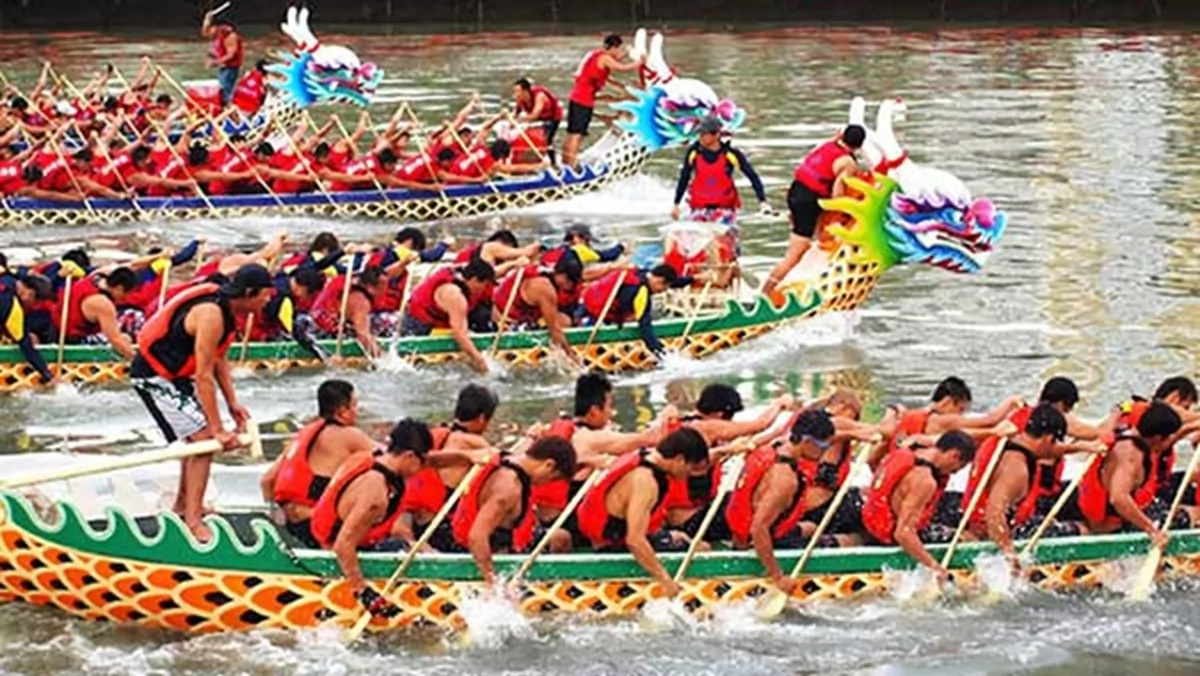
Closely associated with river life, boat racing on the Co Co River creates a strong highlight for the festival section. Teams from Tra Que Vegetable Village and neighboring riverine villages compete in an enthusiastic atmosphere at the beginning of spring.
More than just a race of speed and endurance, this activity also demonstrates the spirit of solidarity, resilience, and youthfulness of the residents in the Hoi An vicinity. Against the backdrop of the gentle river, the sound of the drums urging the boats and the cheering create a vibrant festival scene.
3.3. Cooking contest featuring Hoi An specialties with tourists as judges
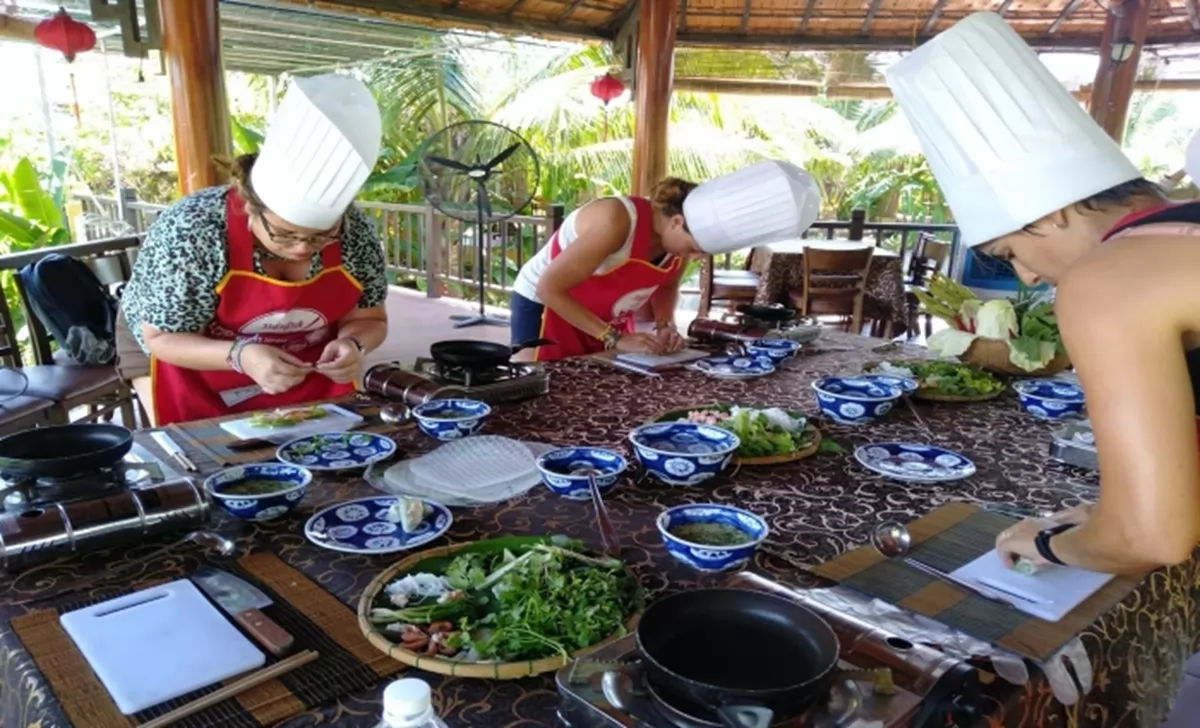
Cuisine is always an indispensable element in traditional festivals, and the Cau Bong Festival is no exception. The cooking contest uses Tra Que vegetables as the main ingredient, combined with famous Hoi An specialties, creating an immersive local culinary exchange space.
The special point is that tourists can directly participate in judging, experiencing a cooking class, and enjoying the finished dishes on the spot. This interaction helps bridge the gap between locals and tourists, while effectively promoting the value of indigenous cuisine associated with clean agriculture.
3.4. Folk art performances and hat boi opera (during triennial grand festivals)
In addition to the competitions and culinary activities, the festival section is also enriched by folk art performances such as bai choi, lion-dance performances, and traditional arts. These performances contribute to creating a lively, distinct Central Vietnamese spring festival atmosphere.
Particularly, during the triennial grand festivals, Tra Que Village may also organize hat boi (classical theatre/opera)—a traditional stage art form with high intangible heritage value. The appearance of hat boi not only elevates the festival but also affirms the role of the Cau Bong Festival in preserving and spreading the traditional cultural values of the Quang region.
4. Unique Culinary and Cultural Experiences
Not only limited to the value of rituals and festivities, the Cau Bong Festival also opens up a space for characteristic cuisine and agricultural cultural experiences of Tra Que Vegetable Village. This factor helps the festival become more intimate and accessible to tourists, while contributing to the development of sustainable eco-tourism for the locality.
4.1. Dishes made from fresh Tra Que vegetables at the village market
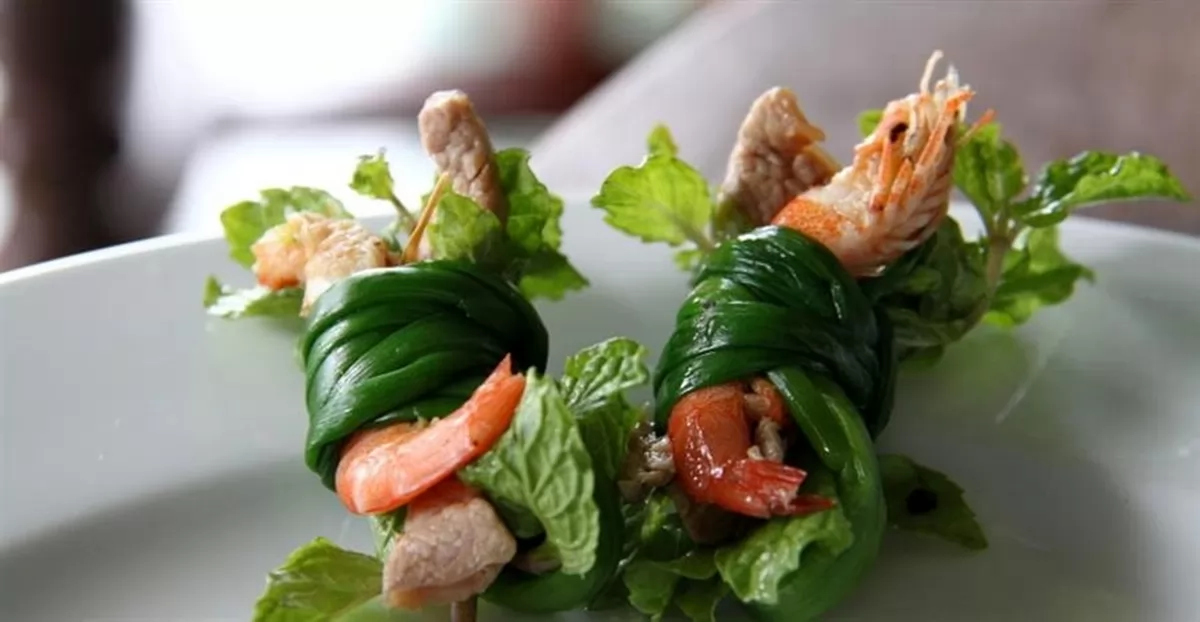
Tra Que vegetables are famous for their rich aroma, mild spicy taste, and natural crunchiness, achieved through traditional farming methods combined with fertilizing with algae from the Co Co River. During the festival days, the village market and temporary food areas become bustling with many rustic yet refined dishes.
Visitors can enjoy spring rolls, tam huu, fresh vegetable salads, banh xeo, mi Quang... using vegetables freshly picked from the garden. The experience of "from the vegetable field to the meal table" brings an authentic feeling, helping diners fully sense the agricultural spirit of Tra Que.
4.2. Enjoying local specialties such as cao lau and Hoi An baguettes
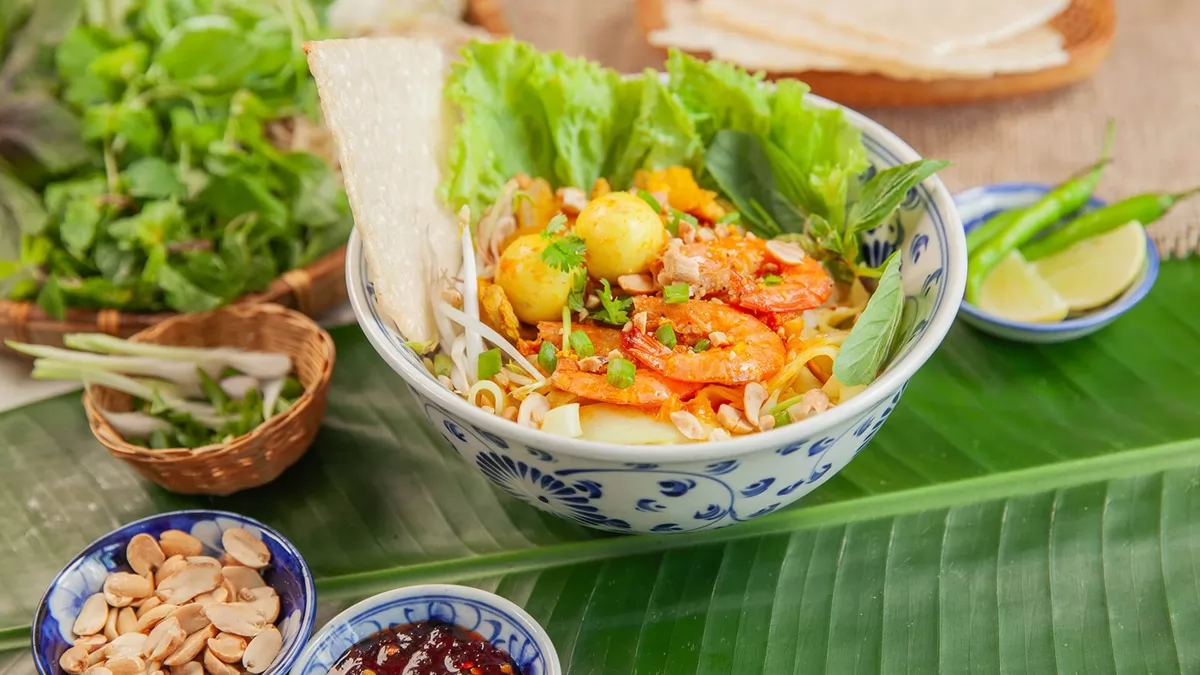
Besides dishes associated with Tra Que vegetables, the festival is also an opportunity for tourists to explore typical Hoi An cuisine such as noodle soup, mi Quang, Vietnamese bread, and chicken rice. When combined with Tra Que vegetables, these familiar dishes possess a unique flavor that is hard to mix up with any other region.
The combination of the specialty village's vegetables and Hoi An's street food not only enriches the taste experience but also contributes to affirming Tra Que's position on Hoi An's culinary-tourism map.
4.3. Shopping for handmade souvenirs and organic fresh vegetables
After attending the festival, visitors can choose fresh vegetables, herb vegetables, packaged organic vegetable products, or small handmade souvenirs such as bamboo/rattan items, pictures, and items associated with the image of Tra Que Vegetable Village.
Many tours also combine experiences of farming, cooking classes, taking photos in the vegetable fields, and buying products to take home, aiming for an eco-tourism model associated with the community. This is how the Cau Bong Festival contributes to creating sustainable livelihoods for the local people.
>>> See more: Festivals in Hoi An: event dates and cultural highlights
Conclusion
The Cau Bong Festival is not only a traditional agricultural festival of over 500 years of Tra Que Vegetable Village but also a cultural symbol that reflects the harmonious relationship between humans and nature. From the solemn ritual section, the vibrant festival section, to the culinary space and experiences, everything creates a vivid heritage picture in the heart of Hoi An.
In the context of strong tourism development, preserving and promoting the value of the Cau Bong Festival not only helps conserve the identity of the traditional craft village but also contributes to affirming the sustainable eco-cultural tourism direction for Tra Que in particular and Hoi An in general. This is why the Cau Bong Festival is a profound destination, worthwhile to experience for anyone who loves traditional Vietnamese culture.
>>> See more: 10 essential things to do in Hoi An for first-time travelers
-
Hotline: 1900 63 66 00
-
Press 1 For tickets
-
Press 2 For Customer Service
 Ba Thu Bon Festival – A Heritage Beauty of the Quang People
 The Long Chu Festival in Hoi An: A Spiritual Ritual and Cultural Experience in the Heart of the Ancient Town
Related news
.webp)
Hoi An Memories: 100% Attractive Ticket Prices - Latest Offers in 2026

Hoi An Day Trip: A Detailed Guide to Fully Exploring the Town in 2026

Top 20 Must-Visit Attractions in Da Nang You Shouldn't Miss
Latest news

MID-AUTUMN FESTIVAL AT THE TRADING PORT – A NIGHT OF MEMORIES, A MEETING OF FIVE CULTURES
.webp)
Hoi An Memories Land Shines Bright to Welcome Visitors for Vietnam’s National Day
.webp)
.webp)
National Day Dressed in the Colors of the Flag with Hoi An Memories Show’s Special Edition

Comment